Mercy Radiology, a New Zealand-based imaging provider, has plans to use artificial intelligence (AI) algorithms to help with the detection of prostate cancer.
Emergency departments, particularly in rural areas, are strained by shortages of physicians and other providers, including nonemergency doctors and advanced practice providers, according to a new study published in the Annals of Emergency Medicine.
The radiology department at Duke University School of Medicine in Durham, North Carolina, has joined the Radiology Partners Research Institute (RPRI), a research collaboration between Radiology Partners and various academic medical institutions.
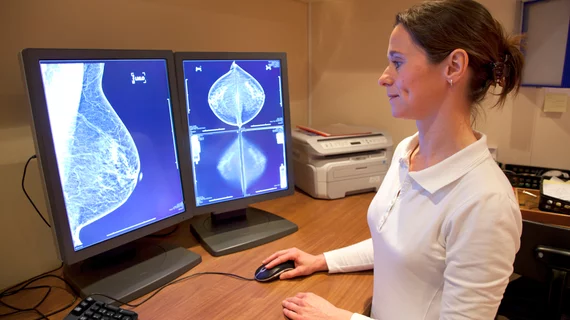
Radiologists make similar breast density assessments using synthesized mammography (SM) and standard or full-field digital mammography (FFDM), according to a new study published by the Journal of the American College of Radiology.
Arterial spin labeling MRI may offer a noninvasive alternative for quantifying cerebral blood flow without the use of contrast agents—a necessity for patients with illnesses like kidney disease, researchers wrote in a Radiology study this June.
Mutations in the CHD4 gene are known contributors to congenital heart defects. Biologists at the University of North Carolina School of Medicine believe they are beginning to understand why.
Several aspects of cancer-related cognitive impairment are currently unknown, including why it occurs, how long it lasts and what other health problems it causes. But the real mystery lies in the wide-ranging estimates of how many cancer patients “chemobrain” actually impacts, according to an article in the Los Angeles Times.
Arkansas radiologist Scott Ferguson, MD, was elected to the American Medical Association (AMA) board of trustees this week after serving as an AMA delegate for nearly a decade, the organization has announced.
The U.S. Preventive Services Task Force (USPSTF) issued a Grade D recommendation against screening with resting or exercise electrocardiography (ECG) to prevent cardiovascular disease events in asymptomatic adults at low risk of CVD events.
A multicenter clinical trial underway at UT Southwestern in Dallas is testing a new technique that would avoid nerve bundles and arteries commonly affected during prostate cancer radiation therapy in hopes of preserving patients’ sexual function.