A new review published in JAMA Internal Medicine adds to the growing body of evidence that physician burnout negatively impacts clinical outcomes, as burned-out doctors were twice as likely to be involved in patient safety incidents, provide suboptimal care as a result of low professionalism and garner low patient satisfaction ratings.
People may no longer need to visit a physician’s office to get accurate blood pressure readings thanks to a new mobile application created by researchers at Michigan State University.
Toronto-based Exact Imaging and Cambridge, U.K.-based Cambridge Consultants have announced a new international partnership focused on improving the way specialists visualize and detect prostate cancer.
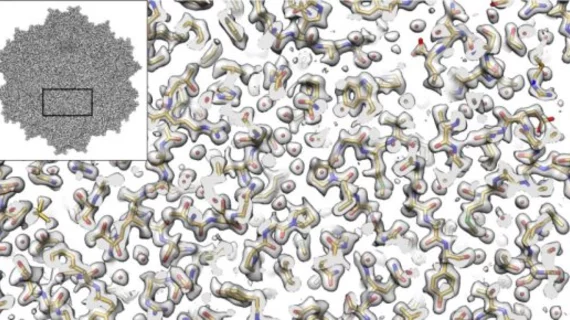
Researchers from the Salk Institute in San Diego and the University of Florida have used cryo-electron microscopy (cryo-EM) imaging to analyze a 3D model of the AAV2 virus. The advanced molecular imaging technique may demonstrate the potential for the virus to act as a delivery vehicle for gene therapies, according to research published Sept. 7 in Nature Communications.
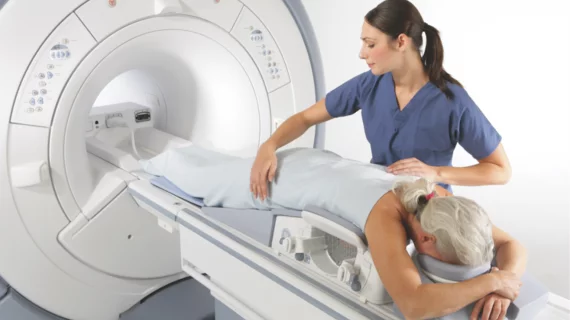
Paul Lauterbur, MD, a former chemistry professor at Stony Brook University in New York known as the “Father of MRI,” was posthumously awarded the Long Island Section of the Institute of Electrical and Electronics Engineers (IEEE) Historical Milestone Plaque for his contributions to the development of MRI.
Fewer Americans smoked or were physically inactive in 2015-16 than four years earlier, but there were also fewer on “appropriate” aspirin therapy to prevent cardiovascular events, according to a Vital Signs report released by the CDC.
Why do some people feel more pain than others? Using fMRI, researchers at Wake Forest School of Medicine in Winston-Salem, North Carolina, found the answer may lie in mindfulness, according to recent research published in PAIN.
New research recommends breast MRI for women with ATM, CHEK2 and PALB2 gene mutations.
Tumor apparent diffusion coefficient (ADC) value, peritumoral ADC value and peritumor-tumor ADC value are predictive breast MRI findings for lymphovascular invasion (LVI) in invasive cancer patients, according to new research published in the European Journal of Radiology.
Pediatric CT neuroimaging has not decreased in the last decade despite ongoing efforts to identify children with traumatic brain injury (TBI) who should avoid scans, according to research published in the September issue of Pediatrics.