Artificial intelligence (AI)-focused startup Qure.ai published a study Tuesday, Sept. 18, validating its chest x-ray algorithm trained on 1.2 million chest scans and radiology reports.
The International Contrast Ultrasound Society (ICUS) has urged the U.S. FDA to remove boxed warnings from ultrasound contrast agents based on research demonstrating its safety and clinical benefits.
The 2018 International Day of Radiology (IDoR) will focus exclusively on cardiac imaging. Like previous years, IDoR 2018 will be celebrated on Nov. 8—the date Wilhelm Conrad Roentgen, the “father of diagnostic radiology,” discovered the existence of x-rays in 1895.
Digital games developed for cardiovascular disease self-management improve exercise capacity and energy expenditure among their users, according to a review published Sept. 18 in the Games for Health Journal, but the approach does little to overcome mental hurdles like depression, anxiety and quality of life.
Many academic medical centers are shifting away from using radiology residents for after-hours imaging interpretations and turning to overnight attending radiologists instead, according to a new analysis published in Radiology.
The prevalence of acute myocardial infarction (AMI) in the heart transplant (HT) population is “very low,” according to research published in the current online edition of the American Journal of Cardiology, but HT patients who do suffer a heart attack are more likely to experience longer hospital stays, higher 30-day readmission rates and greater in-hospital morbidities.
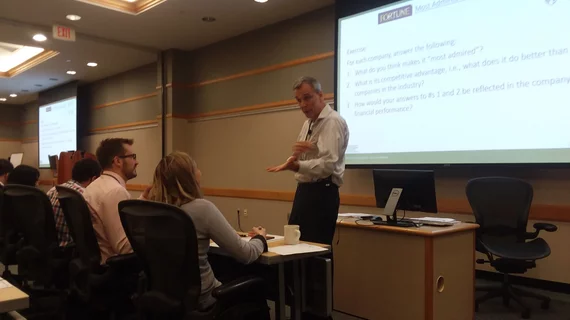
Richard Bliss, PhD, MBA, a finance professor at Babson College, offers business insights applicable to radiology at the 2018 RLI Leadership Summit.
Finance is a language. But even more to the point for radiologists—or, at least, the ones who wish to help future-proof their practices and, along the way, advance the profession as a whole—it’s the language of leadership.
Qure.ai, a San Mateo, California-based healthcare startup focused on artificial intelligence (AI), has released the results of a thorough validation study confirming the accuracy of its deep learning chest x-ray algorithm. The study involved 1.2 million x-rays and their corresponding radiology reports.