Burnout is one of the largest issues affecting healthcare today. A new survey asked more than 15,000 physicians from 29 specialties about burnout and other key areas related to mental health.
Healthcare, senior care and mental health diagnosis and treatment are among several industries expected to be “revolutionized” by AI, according to a report by Forbes.
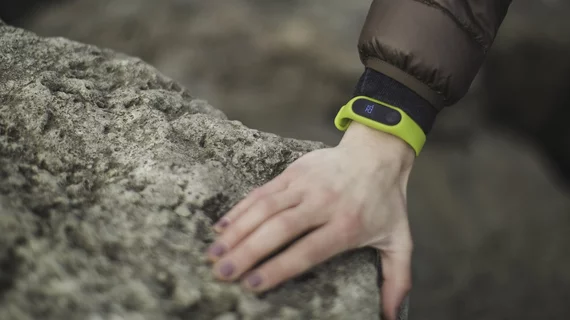
Healthcare spending on wearables is expected to reach $60 billion by 2023 as the technology becomes more popular within the medical industry, according to a recent report by Juniper Research.
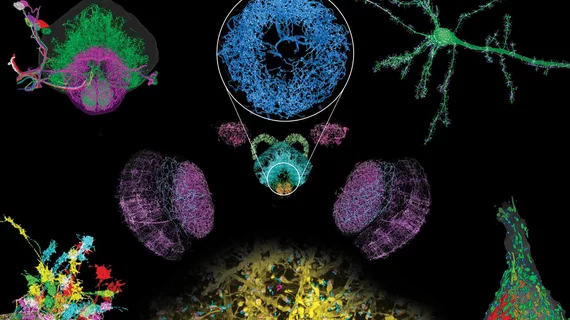
The technology images neural structures with molecular contrast over millimeter-scale volumes, including mouse pyramidal neurons and their processes (top right). Courtesy of the journal, Science.
A novel imaging technique combining two microscopy methods allowed researchers to visualize neural circuits across the brain at four-times that of typical resolutions, according to research published Jan. 17 in Science. The approach can be completed much faster than previously thought possible.
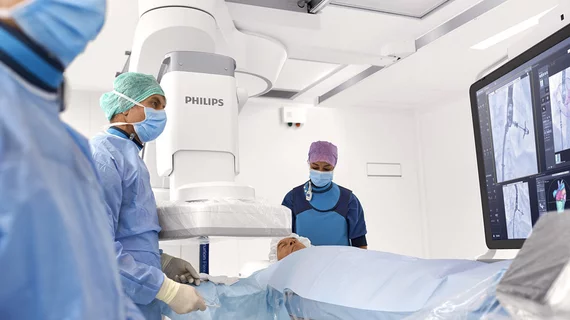
The FDA is looking into the signal of increased late mortality associated with paclitaxel-coated balloons and stents that was observed in a recent meta-analysis of patients treated for femoropopliteal artery disease.
Interventional cardiologist Kipp Webb and representatives from Montana’s Bozeman Health Deaconess Hospital entered a 19-day jury trial Jan. 17 after Webb claimed the hospital created a monopoly over cardiology services in 2011, preventing him from practicing in the area.
At North Cotswolds Community Hospital in Gloucestershire, England, x-ray services were reduced due to ongoing staffing issues. There are now fears that this temporary change will be made permanent.
Older age, smoking and a higher body mass index (BMI) were consistently associated with a heightened risk of venous thromboembolism (VTE) in an analysis of 1.1 million individuals published in JAMA Cardiology.
A new Medscape survey of more than 15,000 U.S. physicians found that 44 percent of radiologists were burned out and 15 percent of overall respondents feel depressed. Roughly 600 of those surveyed work in radiology.