Home

Transcarotid access: The future of non-femoral TAVR?

Research presented at TVT 2019 in Chicago last week suggests a transcarotid approach to transcatheter aortic valve replacement is favorable for patients unable to tolerate femoral access, topping both transapical and transaortic approaches as the preferable route for alternate-access TAVR.  

  • Read more about Transcarotid access: The future of non-femoral TAVR?

AI tracks important changes in imaging results of MS patients

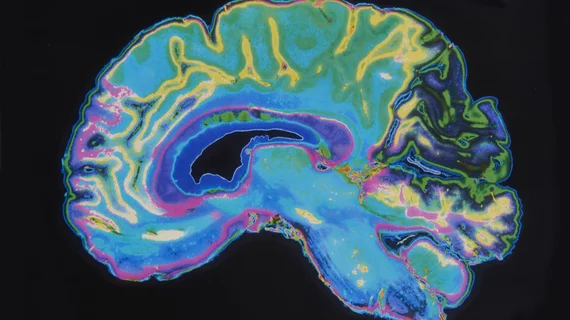
Researchers have used AI to gain additional insight from the brain MRI scans of multiple sclerosis (MS) patients, sharing their findings in Nature Digital Medicine.

  • Read more about AI tracks important changes in imaging results of MS patients

AI best used as second opinion to help radiologists classify ground glass opacities

Artificial intelligence (AI) has been one of the biggest stories in healthcare for years, but many clinicians still remain unsure about how, exactly, they should be using AI to help their patients. A new analysis in European Heart Journal explored that exact issue, providing cardiology professionals with a step-by-step breakdown of how to get the most out of this potentially game-changing technology.

Artificial neural networks (ANNs) can help radiologists classify pure ground glass opacities (GGOs), according to a new study published in Clinical Imaging. But they shouldn't rely solely on AI-produced findings.

  • Read more about AI best used as second opinion to help radiologists classify ground glass opacities

Are Americans the worst patients in the world?

That’s the question David Freedman tried to answer in an article in The Atlantic, pointing out that the high cost of the U.S. healthcare system could come down to the patients themselves.

  • Read more about Are Americans the worst patients in the world?

Why the next TAVR vs. SAVR trial should be in bicuspid AS patients

Physicians are facing a new issue as TAVR expands to younger populations—an increased incidence of bicuspid aortic stenosis.

  • Read more about Why the next TAVR vs. SAVR trial should be in bicuspid AS patients

Higher CT CAC scores indicate future heart problems

Coronary artery calcium (CAC) levels spotted on CT scans in middle-age patients were connected to an increased risk of structural heart abnormalities indicative of future heart failure, according to a new study published in Circulation: Cardiovascular Imaging.


  • Read more about Higher CT CAC scores indicate future heart problems

HHS expands health reimbursement coverage

HHS, with the Departments of Labor and Treasury, has issued a new rule to expand the use of health reimbursement coverage, which provide tax-preferred funds for employees to buy their own insurance on the individual market.

  • Read more about HHS expands health reimbursement coverage

AI able to classify pure ground-glass opacities

Cheryl Petersilge, MD, MBA, with the department of regional radiology at the Cleveland Clinic, examined enterprise imaging—and how radiologists must integrate and collaborate with other departments. Her clinical perspective clinical perspective was published online in the October issue of the American Journal of Roentgenology.

Artificial neural networks (ANNs) can help radiologists classify ground-glass opacities (GGO) with improved accuracy, according to new findings published in Clinical Radiology.

  • Read more about AI able to classify pure ground-glass opacities

Risk vs age: Which mammography screening method is better?

Proponents of risk-based mammography screening claim the method successfully emphasizes its benefits and minimizes its harms, but new research has found it may not be as effective as age-based screening.

  • Read more about Risk vs age: Which mammography screening method is better?

Machine learning predicts psychosis with 93% accuracy

AI is aiding in the diagnosis of several diseases and health risks, and researchers have recently found that machine learning can help predict the onset of psychosis, a debilitating mental disorder that can compromise an individual’s psychology and their ability to think and feel.

  • Read more about Machine learning predicts psychosis with 93% accuracy

Pagination

    • First page « First
    • Previous page ‹ Previous
    • Page …2058
    • Page 2059
    • Page 2060
    • Page 2061
    • Current page 2062
    • Page 2063
    • Page 2064
    • Page 2065
    • Page 2066 …
    • Next page Next ›
    • Last page Last »
Subscribe
  • Home
  • News
  • Article Archive
  • Custom Content
  • Webinars
  • Press Releases
  • Content Studio
  • Advertising
  • Submit Press Release
  • Contact Us
  • Terms of Use
  • Privacy Policy
  • Cardiovascular Business
  • HealthExec
  • Radiology Business
 
© 2026 Innovate Healthcare | All Rights Reserved. | Terms of Use | Privacy Policy
 
Design by Adaptive Theme