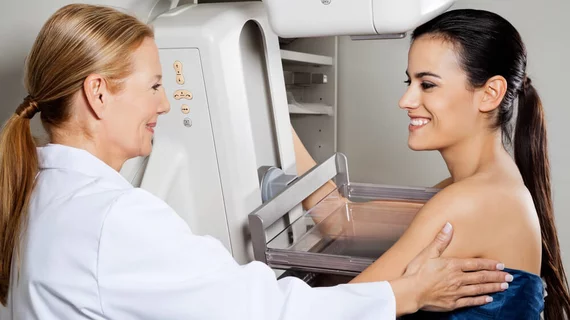
New York Gov. Andrew Cuomo has signed new legislation into law that requires insurance companies to cover medically necessary mammograms for women between the ages of 35 and 39.
Researchers at the University of Delaware are developing a system of wearable video devices and AI analysis tools that, they hope, will help make roads and sidewalks friendlier to walkers, joggers, bicyclists and anyone else keeping fit outdoors.
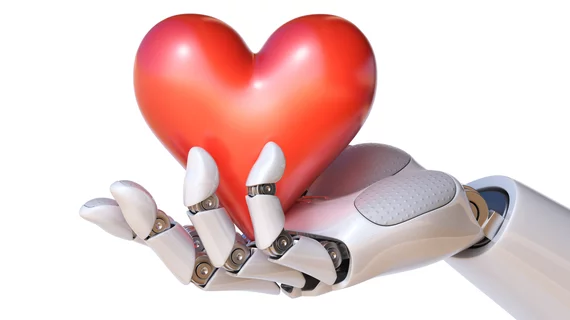
Researchers at Carnegie Mellon University’s College of Engineering have devised a way to 3D bioprint tissue scaffolds out of collagen, putting them one step closer to the goal of printing a full-sized, functional human heart.
There is new synergy afoot when it comes to enterprise imaging. Healthcare systems are increasingly choosing enterprise imaging systems to manage image viewing across the two most image-rich ‘ologies: radiology and cardiology.
AI in healthcare has long been touted as an innovative technology that will accelerate care treatments and even replace some tasks performed by clinicians. But its impact might be inequitable in the future.
Cerner, a global health platform, has teamed up with Amazon Web Services, a subsidiary of Amazon that offer cloud computing platforms, to accelerate healthcare solutions and AI in healthcare.
Allowing natural language processing to pore over disparate data stored in electronic health records, researchers in Canada have shown the AI-based technology can reveal real-world experiences and outcomes of patients with stage III breast cancer.
A study out of Israel has concluded heart attack survivors with an active sex life are better off than their less-active counterparts in the years following an MI, Reuters Health reported August 1.
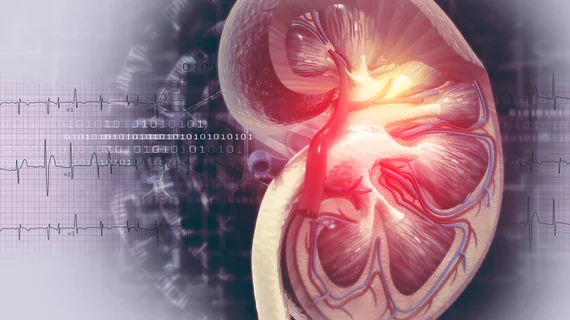
An AI company owned by Google parent company Alphabet, DeepMind, is able to predict future acute kidney injuries and could potentially save lives, according to a new paper published in Nature.
In patients with both type 2 diabetes and an elevated cardiovascular risk, metformin lowers the risk of all-cause mortality but does little to protect against CV death, MI or ischemic stroke, a new evaluation of the SAVOR-TIMI 53 trial has found.