Last week the U.K. government announced plans to pour £250 million (around $301.5 million) into a fledgling AI lab run by the National Health Service (NHS). The work is to focus on advancing medical science in various arenas, including cancer care and dementia. This week the skeptics started weighing in.
Only 51% of consumers feel optimistic or safe when it comes to AI infiltrating the healthcare space in the form of helping providers in diagnostic decision making and care management, according to a recent survey from Blumberg Capital.
Breast cancer screening using digital breast tomosynthesis (DBT) detects more cancers than digital mammography (DM) in women of all density and age groups, according to new research published in Radiology.
Machine learning can accurately predict which patients will not live beyond 30 days after discharge from the ER, giving these patients time to discuss end-of-life care with family members and hospice professionals.
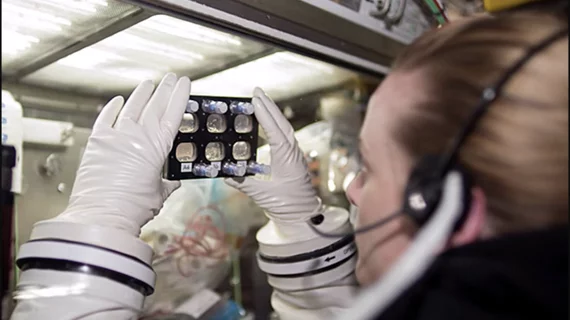
NASA astronaut Kate Rubins culturing heart cells in space in 2019. Image courtesy of NASA
Researchers on the International Space Station are leveraging the microgravity conditions within the ISS U.S. National Laboratory to study heart cells in ways we can’t on the ground.
When Sarah Kliff, healthcare reporter for Vox, saw an emergency department bill charging more than $600 for an encounter that ended with a band-aid, she and the media company undertook a year-long project to explore as many ED bills as possible.
Synthesized digital mammography (SM) was created to help reduce the radiation dose for patients undergoing digital mammography (DM) in digital breast tomosynthesis (DBT), so why haven’t more clinics adopted it?
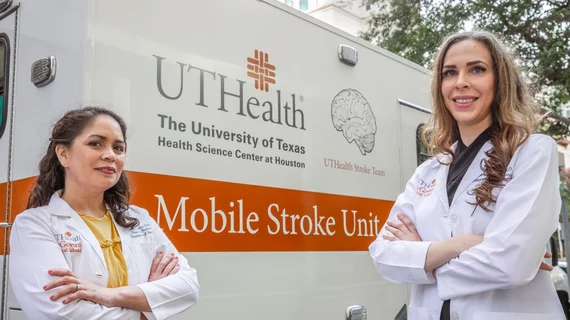
Transport to the hospital via mobile stroke unit—as opposed to standard transit in an ambulance—saved stroke victims 10 minutes and up to 270 million neurons in a study out of the University of Texas Health Science Center at Houston.
Healthcare providers are working to communicate with patients about errors more and more, hoping that well-planned disclosure and apology processes can help limit legislative action and improve care. What is radiology’s role in this growing trend?
Enrollment of people who are ineligible for subsidies on the individual healthcare market appears to be slowing down, according to a recent report from CMS.