Radiological Society of North America (RSNA)

The Radiological Society of North America (RSNA) is a non-profit organization that represents 31 radiologic subspecialties from 145 countries around the world. We provide high-quality educational resources, including continuing education credits toward physicians’ certification maintenance, host the world’s largest radiology conference and publish five top peer-reviewed journals.

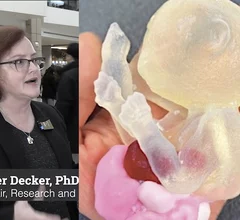
Medical 3D printing expert Summer Decker, PhD, professor and vice chair for research and innovation, and director of 3D clinical applications, University of South Florida (USF) Morsani College of Medicine and Tampa General Hospital, explains what is involved in creating a 3D printiung program in radiology and how it helps patient care.

Pitching the business case for 3D printing labs in radiology

Medical 3D printing expert Summer Decker, PhD, University of South Florida, explains how her lab has helped improve patient care. 

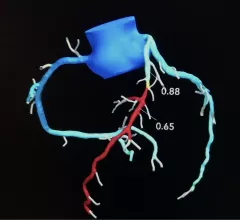
Using computed tomography (CT) to perform coronary artery calcium (CAC) scoring can help identify symptomatic chest pain patients who do not require further testing, according to a new analysis published in Radiology.[1]

Coronary calcium scoring predicts when chest pain patients can skip invasive testing

Using CT to perform coronary artery calcium scoring on symptomatic chest pain patients can deliver significant value, according to a new data published in Radiology

Gold Medal award winner

RSNA announces award recognizing contributions to community health

The Outstanding Community Impact Award honors individuals in radiological sciences who have contributed to patient care and healthcare delivery. 

Kate Hanneman, MD, University Of Toronto, explains why vendors and hospitals are increasingly discussing lowing their carbon footprint by starting with radiology. 

What does radiology have to do with climate change?

Kate Hanneman, MD, explains why many vendors and hospitals want to lower radiology's impact on the environment. "Taking steps to reduce the carbon footprint in healthcare isn’t just an opportunity," she said. "It’s also a responsibility."

Video of Mahadevappa Mahesh, PhD, incoming-AAPM president, professor of radiology and a medical physicist, Johns Hopkins University School of Medicine, explains key trends in imaging physics presented at the Radiological Society of North America (RSNA) 2023 meeting.

6 key trends in medical imaging physics

Mahadevappa Mahesh, PhD, incoming American Association of Physicists in Medicine president, discusses key developments in the specialty. 

The rate of radiology reading errors has not changed in 75 years, despite technology advances, explains Michael Bruno, MD, Penn State Hershey Medical Center, who outlines the reasons why.

Error rates in radiology have not changed in 75 years

Radiology report reading errors are as prevalent as ever. Michael Bruno, MD, of Penn State Hershey Medical Center says it's time for that to change.

Kyle Souligne, director, enterprise imaging radiology, Agfa Healthcare, discusses technologies like workflow orchestration, AI and cloud that can be used to optimize radiologist’s processes and create efficiency, so they work smarter, not harder. These technologies are playing an increasing role to address the shortage of radiologists.

Optimizing reading efficiency to address radiologist shortages

Agfa Healthcare's Kyle Souligne discusses technologies that can optimize physicians' efficiency to help practices do more with less. 

Lyle McMillin, principal healthcare product manager with Hyland, explains radiology IT issues and how cloud and enterprise imaging can be a solution. #RSNA #RSNA23 #RSNA2023 #PACS #enterpriseimaging

Radiology embracing the flexibility of imaging data stored off-site in the cloud

Lyle McMillin, with radiology IT vendor Hyland, explains trends he sees in the market and a definite shift toward cloud and enterprise imaging to address challenges in the market.