Society for Cardiovascular Angiography Interventions (SCAI)

The Society for Cardiovascular Angiography and Interventions (SCAI) represents interventional cardiology through education, advocacy, research, setting guidelines and quality patient care. SCAI provides thought leadership in cath lab procedures, new technology and policy.

The Society for Cardiovascular Angiography and Interventions (SCAI) is urging federal policymakers to ensure physicians play a central role in guiding the integration of artificial intelligence (AI) into clinical care, while also raising questions about liability as the technology expands across healthcare.

AI is transforming patient care—and cardiologists have a critical role to play

While the Trump administration is pushing to accelerate clinical AI adoption, SCAI has emphasized that physicians must guide how the technology is implemented and governed.

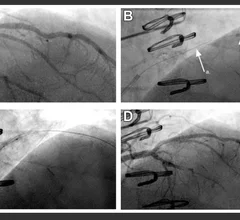
Angiography demonstrates a high-grade, modestly angulated stenosis (arrow) in the proximal segment of a large diagonal branch (A). Predilation performed with difficulty, and the GEC could not be advanced beyond stenosis even with “inch worming” techniques. (B). Advancement of the CrossFAST (C) beyond the proximal stent edge stenosis (a.), the position of the distal end of the outer catheter (b.), and the microcatheter tip (c.) are indicated.

Next-generation guide extension catheter delivers value during complex PCI

The CrossFAST system was successfully used to deploy multiple stents after other devices fell short. 

artificial intelligence AI policy washington capitol

Cardiology groups to Trump administration: AI still has a long way to go

Multiple cardiology societies responded to an HHS request for public feedback by outlining some of the current barriers to wider AI adoption. "It is essential that any policy frameworks must reaffirm that clinicians—not algorithms—remain at the center of patient care," ACC President Christopher Kramer, MD, said. 

SCAI celebrates new federal funding for PAD prevention

The group's hope is that these new funds will help address the rising rates of PAD and CLTI throughout the United States.

Image of the A-FLUX Reducer System for chest pain by VahatiCor

New heart device for ‘no-option’ chest pain patients shows early potential

The self-expanding, recapturable coronary sinus reducer was associated with a safe implant procedure and "promising" outcomes after six months. Additional research is already underway.

Cardiologist heart

TAVR a safe treatment option for patients who have undergone chest radiation therapy

In fact, researchers wrote, TAVR and SAVR were linked to comparable long-term outcomes for heart patients who have previously been exposed to mediastinal radiation. 

First ACC/AHA acute pulmonary embolism guidelines include new categories for risk stratification

The new guidance, the first of its kind, focuses on the importance of making a prompt diagnosis and providing care as quickly as possible. While some PE patients with mild cases can be discharged early, others may require an immediate catheter-based intervention or surgery.

Cardiologists urge Congress to pass new bills focused on PAD, Medicare coverage

SCAI has shared a new call to action as an observance of American Heart Month. The group is asking Congress to pass new pieces of legislation that could improve care for PAD patients and get important medical devices in the hands of interventional cardiologists.