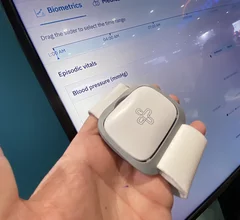
Remote Monitoring

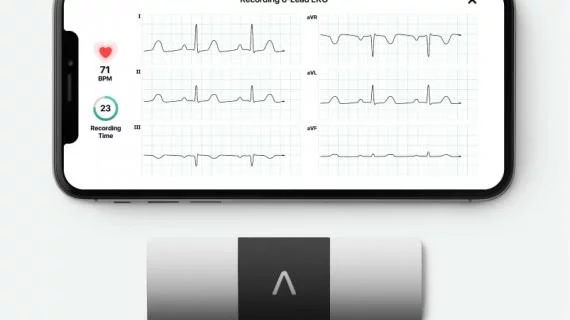
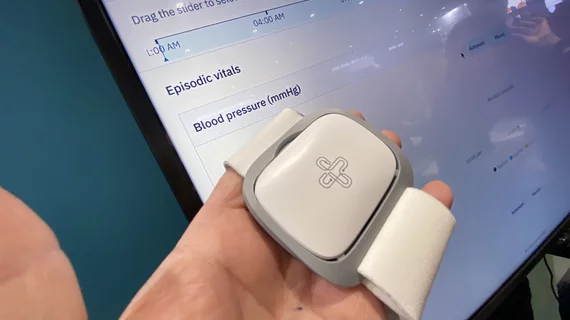
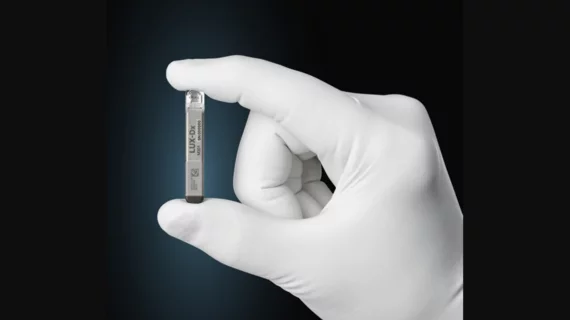
Remote cardiac monitoring technologies enable patient health to be tracked outside the clinical setting. It can be used for longer term monitoring to help diagnosis arrhythmias or other cardiac conditions. Remote monitoring also can keep tabs on chronic conditions such as heart failure or hypertension and alert clinicians to worsening symptoms to avoid an acute care episode or hospitalization.

Congress Senate Washington D.C. DC

EP advocacy group details 6 key policy issues

The Heart Rhythm Society's advocacy arm is monitoring such issues as prior authorization, outpatient payment policies and cancelled research funding. 

Afnan Tariq, MD, JD, FSCAI, FACC, an interventional cardiologist, assistant clinical professor of medicine at University of California, Irvine, presented first-in-man data on a passive, device-agnostic artificial intelligence (AI) platform for heart failure monitoring using consumer wearables at the recent Technology and Heart Failure Therapeutics (THT) 2026 meeting. The study showed the AI could help lower repeat hospitalizations.

AI turns wearable device data into actionable insights for heart failure patients

Afnan Tariq, MD, discusses early data on a passive, device-agnostic AI platform for heart failure monitoring. “When clinicians are empowered with insights and able to act earlier, you're able to have a durable impact," he said.

Ligence Heart is a recently FDA cleared AI that fully automates analyses, measurements and reporting for transthoracic echo.

Cardiology now has more than 200 FDA-cleared AI algorithms

Cardiology is No. 2 behind radiology when it comes to FDA-cleared AI algorithms. Neurology, meanwhile, is a distant No. 3. 

Abbott has secured U.S. Food and Drug Administration (FDA) approval for its CardioMEMS HERO device, a next-generation pulmonary artery (PA) pressure reader for heart failure patients.

FDA approves next-generation CardioMEMS reader for heart failure monitoring

The updated reader is 60% smaller and offers built-in WiFi connectivity. It works with an implantable sensor to monitor a patient's PA pressure. 

The U.S. Food and Drug Administration (FDA) has granted 510(k) clearance for a 12-lead electrocardiogram (ECG) synthesis software for home assessment of arrhythmias. This clearance follows HeartBeam’s successful appeal of a prior "not substantially equivalent (NSE) determination.

FDA clears 12-lead, cable-free home ECG monitoring system

The new technology synthesizes signals from a credit card-sized device into a 12-lead ECG representation. 

The HeartBeam AIMIGo device is approximately the size of a credit card and uses the company’s patented 3D vectorelectrocardiography (3D VECG) technology to capture signals from three different projections and deliver a synthesized 12-lead ECG.

ECG market keeps evolving thanks to AI, home monitoring and Epic integration

For years, the ECG market was relatively static. According to a new report, however, things are rapidly changing. 

Abbott’s FreeStyle Libre 3 integrated continuous glucose monitoring (iCGM) system

FDA confirms recalls for Abbott CGM sensors—new lawsuit alleges company concealed information

The FDA finalized four Class I recalls related to safety concerns first reported by Abbott in November. Meanwhile, a Florida man who uses these sensors to manage his diabetes has already filed a lawsuit over the issue.

technologist remote scanning Philips Radiology Operations Command Center ROCC

'We've got to set the standard': Imaging leaders want safety at the forefront of remote operations

Perhaps the biggest sticking point in the debate around remote imaging operations relates to the bedside. If a technologist is running the exam remotely, who is tending to patients on-site?