Medical Imaging

Physicians utilize medical imaging to see inside the body to diagnose and treat patients. This includes computed tomography (CT), magnetic resonance imaging (MRI), X-ray, ultrasound, fluoroscopy, angiography,  and the nuclear imaging modalities of PET and SPECT. 

Thumbnail

Canadian particle accelerator produces Tc-99m isotopes

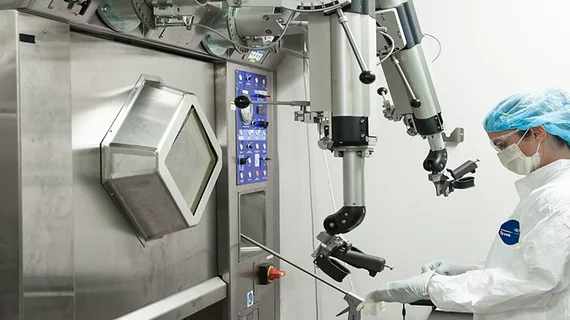
A team at the University of Alberta in Canada has devised a method utilizing a cyclotron particle accelerator to produce the radioactive tracer technetium-99m—the parent of Molybdenum-99. It may be able to produce enough radioactive isotope for the entire province, CBC.ca reports.

Machine learning objectively contours CT scans, saves time for radiation oncologists

Contouring is an instrumental process for radiation oncologists and their patients—but the method is highly subjective. Researchers found their deep neural network algorithm could result in massive time savings for providers.

Thumbnail

No-shows in radiology most common for mammogram, ultrasound appointments

Around 3 percent of radiology patients miss pre-scheduled imaging appointments at any given time, researchers out of the University of Washington report in the Journal of the American College of Radiology—but mammography and ultrasound see no-show rates more than double that.

Thumbnail

Computational method uses CT, algorithms to assess lungs for COPD

A research team compiled of mathematicians, clinicians and imaging technicians from the University of Southampton in the U.K. recently developed a computational method to analyze x-ray images of the lungs for overall function and presence of fatal diseases.

Thumbnail

Expensive imaging: New data reveal MRI prices highest in the US

The average price of an MRI in the United States is $1,119, higher than in any comparable countries, according to a new report from the Kaiser Family Foundation. The report examined the availability, utilization and prices of a variety of health services in countries all over the world.

Thumbnail

MRI-guided biopsy or not? Both beat standard invasive method for prostate cancer diagnosis

When testing for prostate cancer, multiparametric MRI with or without targeted biopsy was more effective than the common standard transrectal ultrasonography-guided biopsy, but a recently published editorial argues more testing is needed.

Multicenter trial finds MRI-targeted biopsies superior to standard biopsies for diagnosing prostate cancer

When treating men with a clinical suspicion of prostate cancer, providers often turn to an ultrasound-guided biopsy of the prostate, though that method has been associated with missing clinically significant cancers and detecting clinically insignificant cancers.

USPSTF updates PSA-based screening guideline for prostate cancer

On May 8, the Journal of the American Medical Association released an update to the 2012 U.S. Preventive Services Task Force (USPSTF) recommendation regarding prostate-specific antigen (PSA)-based screening for prostate cancer.