Medical Imaging

Physicians utilize medical imaging to see inside the body to diagnose and treat patients. This includes computed tomography (CT), magnetic resonance imaging (MRI), X-ray, ultrasound, fluoroscopy, angiography,  and the nuclear imaging modalities of PET and SPECT. 

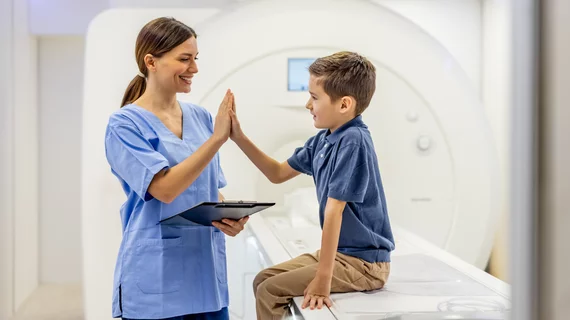
Untraditional teaching tool underscores importance of MRI safety for radiology trainees

Applying an alternative deep learning, assessment-based approach to radiology education could help trainees better retain information for use in future work, according to a study published in Radiography this month.

Thumbnail

Weight-Bearing CT International Study Group to host session at AOFAS 2018 Annual Meeting

The Weight-Bearing CT International Study Group is scheduled to host a scientific session on various benefits of weight-bearing extremity CT exams July 12 at the Hynes Convention Center in Boston.

Thumbnail

Can biparametric MRI accurately detect prostate cancer?

Research from the last 17 years shows that biparametric MRI (bpMRI) gives radiologists an accurate tool for detecting prostate cancer (PCa), according to a new meta-analysis published by the American Journal of Roentgenology.

Thumbnail

Synthesized 2D mammography assesses breast density comparable to digital mammography

Breast density measurements by radiologists on synthesized digital breast tomosynthesis (DBT), or synthesized mammography (SM), exams are equivalent to breast density measurements found with a full-field digital mammogram (FFDM), or standard 2D mammography, according to a study published June 12 in the Journal of the American College of Radiology.

MRI finds brains of children hooked on video games similar to those of drug, alcohol addicts

An MRI study out of California has found excessive social media and addictive video games can have an effect on children’s brains similar to that of drug abuse or alcoholism.

Thumbnail

Most patients prefer cancer screenings—even when the risks top benefits

"Our findings show that people have a strong desire to do something to address the threat of cancer and that they would prefer to receive a screening test that does not save lives rather than not be screened at all," said lead author Laura Scherer, PhD.

Study: Some MRI can do more harm than good for lower back pain

“There is a very poor relationship between changes on MRI scans and the presence or absence of low back pain," Martin Underwood, MD, a general practitioner and a professor at Warwick Medical School, told The Guardian. “If you get into the business of treating disc degeneration because it has shown up on an MRI, the likelihood is that, in most of those people, it is not contributing to their back pain.”

Researchers ID new subtype of prostate cancer

Researchers from the University of Michigan Rogel Cancer Center have discovered a new subtype of prostate cancer that occurs in about 7 percent of patients.