Medical Imaging

Physicians utilize medical imaging to see inside the body to diagnose and treat patients. This includes computed tomography (CT), magnetic resonance imaging (MRI), X-ray, ultrasound, fluoroscopy, angiography,  and the nuclear imaging modalities of PET and SPECT. 

Thumbnail

EMR-based messaging tool helps patients connect with radiologists

Allowing patients to communicate directly with radiologists through an online portal helps them stay informed and feel more engaged, according to a case study published in the Journal of the American College of Radiology.

DBT detects additional lesions during breast cancer staging

Combining digital breast tomosynthesis (DBT) with digital mammography (DM) can spot additional lesions in patients with breast cancer, reported authors of a recent study published in Radiology. However, the combined method did have limitations.

Thumbnail

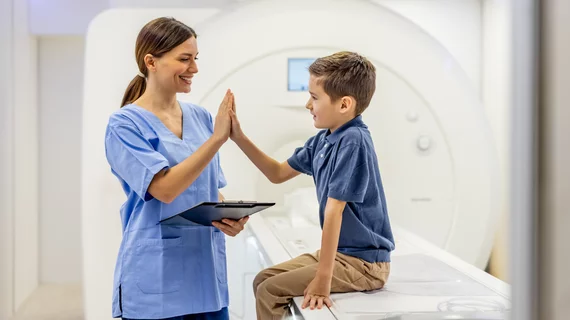
Checklist helps providers know when patients need general anesthesia before MRI scans

Researchers have developed a new checklist to determine if general anesthesia (GA) is needed when children and young adults undergo MRI scans, sharing their findings in Clinical Radiology.

Thumbnail

SIIM 2019 Q&A: Dr. Kahn on Radiological AI and Its Practical Pursuits

The terms “AI” and “machine learning” appear early and often on the agenda for SIIM19, which rolls into Denver the last week of June. The heavy dose of AI-related tech talk is no surprise, given the fast and steady interest in these technologies evidenced by imaging informaticists in medicine.

Thumbnail

Dizzying Costs Are Treatable

Has the value-based U.S. healthcare system become so focused on the bottom line that care is, in cases, getting compromised? 

Thumbnail

PET brain scans help connect the dots between CTE, tackle football

PET brain scans of living former NFL players with cognitive and neuropsychiatric symptoms showed higher tau levels than controls in brain regions typically affected by chronic traumatic encephalopathy (CTE), according to an April 11 study published in the New England Journal of Medicine (NEJM).

Thumbnail

AI helps ID schizophrenia through brain imaging

Researchers have identified an approach for more accurately diagnosing schizophrenia using AI, bringing some objectivity to the field of neurodevelopmental disorder diagnosis, according to a study published in the May edition of Artificial Intelligence in Medicine.

Researchers use deep learning, ECGs to detect hyperkalemia

A deep learning model trained on more than 1.5 million electrocardiograms can reliably detect hyperkalemia—or abnormally high potassium levels in the blood—among patients with chronic kidney disease (CKD), Mayo Clinic researchers reported April 3 in JAMA Cardiology.