Medical Imaging

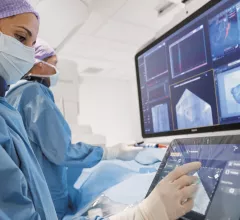
Physicians utilize medical imaging to see inside the body to diagnose and treat patients. This includes computed tomography (CT), magnetic resonance imaging (MRI), X-ray, ultrasound, fluoroscopy, angiography,  and the nuclear imaging modalities of PET and SPECT. 

Thumbnail

Does size matter? 3 key findings from a new study on developing AI for radiology research

When research teams are developing deep learning models, they have to make certain decisions about the image resolutions used in their work. For instance, should they always aim to use the largest images possible? Or are there times when smaller images can get the job done?  

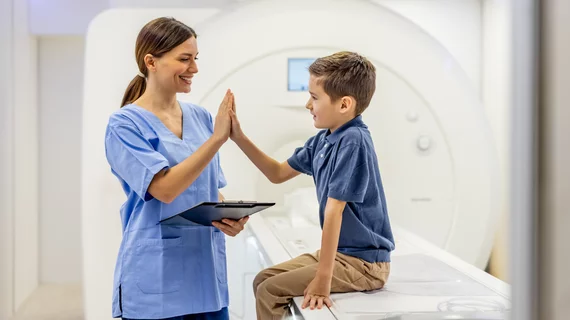
Risk-based imaging most cost-effective approach in children with potential appendicitis

Utilizing more efficient imaging protocols could spare patients from unnecessary radiation while also improving value.

Simple ECG score helps estimate MI infarct size

A simple ECG score could help physicians estimate infarct size in patients with prior MI, according to work published Jan. 24 in the Journal of the American Heart Association.

Thumbnail

Automated analysis tool assesses thyroid nodules as well as radiologists

Researchers have developed a new quantitative framework that evaluates thyroid nodules at a level comparable to two expert radiologists.

Thumbnail

PET/MRI spots breast cancer biomarkers for risk-based screening methods

Imaging markers such as breast parenchymal uptake varied greatly between women with benign and malignant lesions, according to a study published in the Journal of Nuclear Medicine.

Thumbnail

How AI reduces radiation dose, but not quality, of key imaging findings

Deep learning-based reconstruction (DLR) can reduce the radiation dose associated with low-dose chest and abdominal CT scans without sacrificing image quality, according to a new study published in the American Journal of Roentgenology.

Thumbnail

ACR: Risk of administering CT contrast in patients with kidney disease ‘has been overstated’

The National Kidney Foundation joined the college in releasing a new consensus document that answers key questions and offers recommendations for using IV contrast in patients with impaired kidney function.

Thumbnail

Medical imaging, radiation therapy professionals urged to embrace AI

The American Society of Radiologic Technologists (ASRT) has published a new white paper on AI and its potential impact on the work of medical imaging and radiation therapy professionals.