Medical Imaging

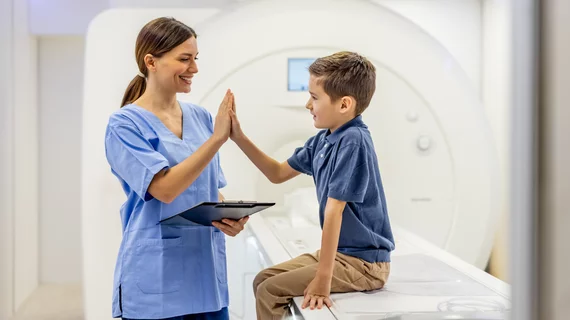
Physicians utilize medical imaging to see inside the body to diagnose and treat patients. This includes computed tomography (CT), magnetic resonance imaging (MRI), X-ray, ultrasound, fluoroscopy, angiography,  and the nuclear imaging modalities of PET and SPECT. 

FDA changes course, limiting suggested uses for groundbreaking Alzheimer’s drug

The agency now recommends Aduhelm only for patients in the early stages of the disease, more closely aligning with the population tested during clinical trials.

Rutgers opens new center for brain imaging focused on diagnosing neurological disorders

The Rutgers Center for Advanced Human Brain Imaging Research houses a state-of-the-art 3T MRI scanner that will help investigate Alzheimer's disease, addiction, and other conditions.

lung cancer pulmonary nodule chest

ACR releases new guidance to help radiologists manage incidental lung findings on CT scans

The 13-page white paper touches on everything from specific findings and reporting terms, to balancing a patients' risk and benefits.

Thumbnail

Radiologists utilize novel CAD-RADS in 95% of coronary CTA reports

Massachusetts General Hospital doctors analyzed Coronary Artery Disease Reporting and Data System usage in their high-volume cardiac CT services center for the study.

Thumbnail

Hybrid imaging detects results missed by CT in patients with deadly pancreatic cancer

German researchers used 68Ga-FAPI PET/CT imaging to analyze 19 patients with pancreatic ductal adenocarcinomas.

Doctors warn against off-label use of aducanumab amid adverse amyloid imaging findings

Leading experts say there is no clinical evidence the controversial drug can help patients with cerebral amyloid angiopathy, a condition similar to Alzheimer's disease.

Thumbnail

Jury convicts former imaging center chain CEO in $250M MRI bribe scheme

Sam Solakyan, 40, the former head of Vital Imaging Inc., faces a maximum sentence of 240 years in prison for his cross-referral scam. 

Thumbnail

Radiologists interpret chest X-rays better with AI than without it

Deep learning assistance enhanced providers' accuracy in 80% of clinical findings, experts reported in The Lancet Digital Health.