Medical Imaging

Physicians utilize medical imaging to see inside the body to diagnose and treat patients. This includes computed tomography (CT), magnetic resonance imaging (MRI), X-ray, ultrasound, fluoroscopy, angiography,  and the nuclear imaging modalities of PET and SPECT. 

Stratifying patients by risk of poor outcomes could reduce overtreatment of lung cancer

Researchers are using radiomics to narrow patient cohorts down to those who are at the greatest risk of poor lung cancer outcomes.

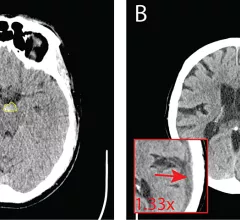
Ischemic stroke CT imaging. Images courtesy of RSNA

Stroke care still lags among certain Medicare populations

Despite increases of 250% for CTA and 428% for CTP, researchers observed lower rates of neuroimaging utilization among rural residents, older individuals (80 years and above), women and Black patients.

Thumbnail

AI spots pancreatic cancer in its earliest stages

Experts involved in the study suggest their findings could eventually be used to detect pancreatic cancer in its earliest stages when patients are most likely to respond to interventions favorably.

AI aids coma prognostics, potentially averting withdrawal of care

Deep learning has bested experienced neurosurgeons at predicting poor outcomes, including mortality, among patients admitted comatose with severe traumatic brain injuries.

Machine learning model quickly and accurately predicts outcomes for TBI patients

The model combines clinical data with imaging from head CT scans in individuals with severe traumatic brain injuries to quickly predict 6-month outcomes.

Ischemic stroke CT scan showing color coded blood flow for early and later arterial and venous contrast phases and areas of blocked blood flow. Image courtesy of RSNA

Disparities evident as CT stroke imaging rises sharply over 7-year period

Utilization of head CT perfusion (CTP) for imaging stroke patients spiked 428% between 2012 and 2019. Curiously, the uptrend was associated with higher mortality up to a year after discharge.

Thumbnail

New MRI technique helps physicians ID multiple sclerosis lesions

By superimposing images of tiny veins in the brain over conventional MRI modules, physicians can identify the distinguishing "central vein sign."

breast radiologist breast cancer mammography

Metastatic breast cancer survival rates are up in Medicaid expansion states

A JAMA Oncology study found a decrease in two-year mortality rates between 2010 and 2015, attributing the findings to a 2014 Medicaid expansion.