Medical Imaging

Physicians utilize medical imaging to see inside the body to diagnose and treat patients. This includes computed tomography (CT), magnetic resonance imaging (MRI), X-ray, ultrasound, fluoroscopy, angiography,  and the nuclear imaging modalities of PET and SPECT. 

Emergency overreads change care for 92% of patients with discrepant outside reports

When emergency radiologists overread interpretations of critically ill transfer patients, they discover discrepancies in fewer than 15% of cases. However, more than 90% of these second opinions produce a change in patient care or follow-up.

Vascular CT beyond the coronaries includes imaging for aortic aneurism, aortic dissection, SCAD and fibromuscular dysplasia. #SCCT #SCCT2022 #SCAD #yescct

VIDEO: Vascular imaging applications for CT beyond the heart

Society of Cardiovascular Computed Tomography (SCCT) President Brian Ghoshhajra, MD, explains the vascular imaging sessions at SCCT 2022 that went beyond the usual coronaries and structural heart evaluations.

5 ways to recruit sorely needed patients for Alzheimer’s clinical trials involving therapeutics

The demand is especially great for asymptomatic individuals of all races and ethnicities.

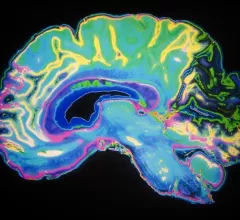
New MRI algorithm could qualify more epilepsy patients for surgery

When applied to brain imaging, the algorithm assists in the detection of subtle abnormalities in instances of drug-resistant focal cortical dysplasia (FCD), which is known to cause epilepsy and is historically difficult to detect. 

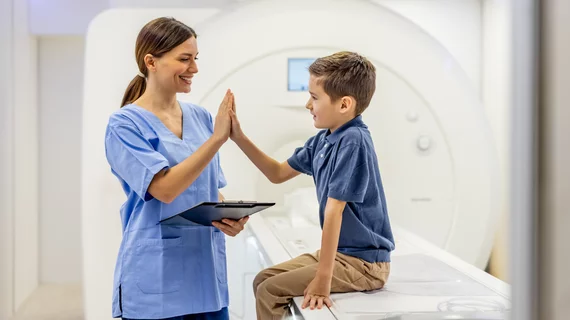
Faster CT translates to fewer sedated children

Upgrading to dual-source, dual-energy CT machines cut average pediatric scan times from around 12 seconds to three seconds or less at two sites of an academic emergency department.

Whole-body PET image reveals body's immune response to COVID

In the study, patients who had recovered from an COVID infection were injected with a small amount of the 89Zr-labeled radiotracer before undergoing a uExplorer PET/CT scan.

FDA greenlights ortho robot, automated MRI brain modeling

FDA approvals arrive for ClearPoint Neuro and MicroPort Navibot. 

coronary CTA

Deep learning, subtraction technique ideal for evaluating stent re-stenosis on coronary CTA

Detecting in-stent restenosis via coronary CTA with hybrid iterative reconstruction has historically been an exercise in avoiding false positives.