Medical Imaging

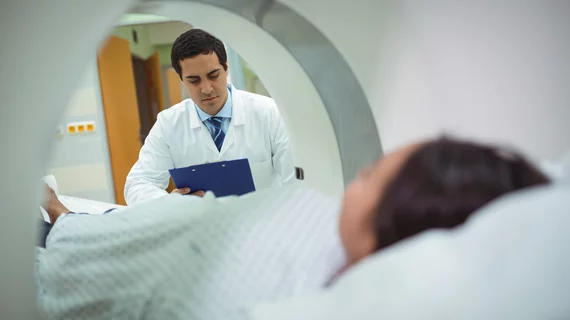
Physicians utilize medical imaging to see inside the body to diagnose and treat patients. This includes computed tomography (CT), magnetic resonance imaging (MRI), X-ray, ultrasound, fluoroscopy, angiography,  and the nuclear imaging modalities of PET and SPECT. 

 Greg Piefer, PhD, CEO and founder of Shine, explains the timeline to restart U.S. production of molybdenum-99 (Mo-99) for nuclear imaging.

Shine working toward U.S. production of Mo-99 for SPECT nuclear imaging

Greg Piefer, PhD, chief executive and founder of Shine, a Wisconsin-based radiopharmaceutical company that is building the world’s largest medical isotope production facility in Janesville, Wisconsin, explains progress on the company's fusion reactor that will become the first sustained U.S. commercial supplier of molybdenum-99 in decades.

cat feline kitty meow meow

Cats and humans with dementia experience similar brain changes, study finds

Researchers at the University of Edinburgh found that cats with dementia, like humans, have protein buildup in synapses that impacts cognitive function and memory.

Molecular Imaging PET and SPECT sign in GE booth ACC23.

Shine working toward U.S. production of Mo-99 for SPECT imaging

Greg Piefer, PhD, chief executive and founder of SHINE, a Wisconsin-based radiopharmaceutical company that is building the world’s largest medical isotope production facility in Janesville, Wisconsin, explains progress on the company's fusion reactor that will become the first U.S. commercial supplier of molybdenum-99 in decades.

breast cancer screening mammography

AI as a second reader outperforms radiologists

New research published in Lancet Digital Health details the improved cancer detection rates achieved when AI serves as a second reader. 

Thumbnail

Hospital suspends mammography services due to staffing shortage

Local officials are describing the matter as "a deeply regrettable situation."

PSMA PET/CT scans can identify prostate cancer patients most likely to benefit from salvage radiotherapy

A new study is the first to show that men with biochemically recurrent prostate cancer who undergo PSMA PET/CT prior to salvage therapy have improved survival rates. 

Seth Baum, MD, FACC, FACPM, FAHA, FNLA, FASPC, Chairman of the Board for the Family Heart Foundation, past president of the American Society for Preventive Cardiology, clinical affiliate professor of biomedical science at Florida Atlantic University, and chief medical officer of Flourish Research, explains why testing for familial hypercholesterolemia (FH) and elevated Lipoprotein(a) could be critical to identify more patients with elevated risk of cardiac events, but have their LDL well controlled.

Lipoprotein(a) tests could transform patient care—is it time for universal screening?

"Lp(a) represents the most important potential potential paradigm shift in cardiovascular disease prevention that we'll experience over the next five to 10 years," Seth Baum, MD, explained in a new interview.

MRI findings hold clues for treating alcohol use disorder

Researchers say their findings suggest that medications that increase prefrontal dopamine "are an important lead to pursue.”