Medical Imaging

Physicians utilize medical imaging to see inside the body to diagnose and treat patients. This includes computed tomography (CT), magnetic resonance imaging (MRI), X-ray, ultrasound, fluoroscopy, angiography,  and the nuclear imaging modalities of PET and SPECT. 

FDA greenlights intracranial hemorrhage AI

RapidAI has been cleared for U.S. marketing of updated AI-outfitted software that quickly detects or rules out acute brain hemorrhage on unenhanced CT.

Thumbnail

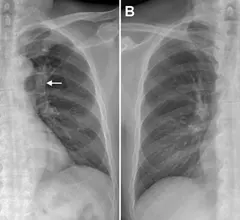
Dynamic chest radiography a suitable, low-cost alternative to V/Q scanning for pulmonary hypertension

Dynamic chest radiography was recently shown to be comparable to lung ventilation-perfusion scanning for detecting chronic thromboembolic pulmonary hypertension.  

Lyme disease neuroimaging uncovers compensatory brain repair

Lyme disease patients treated for “brain fog” may develop compensatory alterations in white matter that show up on MRI and correspond—unexpectedly—with slow but sound cognitive performance.

Thumbnail

Why some women tend to overestimate their breast cancer risks

For women with dense breasts, it can be particularly challenging to differentiate between actual and perceived breast cancer risks.  

hand x-ray radiograph

Has electronic cropping in digital radiography resulted in the death of collimation?

While electronically cropping an image may seem like a harmless act, the habit is not without unintended consequences, the authors of a new paper recently explained.

A convicted murderer's fate could hinge on different interpretations of her brain scans

In the case of a convicted murderer, a New York neuro specialist cited a slew of neuroimaging findings that indicate “severe dysfunction” that could have numbed the defendant’s “brakes of inhibition.” 

VIDEO: The many benefits of spectral CT for cardiovascular imaging

Suhny Abbara, MD, editor of Radiology: Cardiothoracic Imaging and chief of cardiothoracic imaging for University of Texas Southwestern Medical Center, discusses how spectral computed tomography (CT) can help both cardiac and general CT imaging.

Thumbnail

Neuroimaging recedes behind other cost compilers in stroke care

Contrary to older research that showed neuroimaging emerging as the single most dominating cost contributor in ischemic stroke care for older Americans, a new study shows treatment and other line items account for bigger slices of the bill.