Medical Imaging

Physicians utilize medical imaging to see inside the body to diagnose and treat patients. This includes computed tomography (CT), magnetic resonance imaging (MRI), X-ray, ultrasound, fluoroscopy, angiography,  and the nuclear imaging modalities of PET and SPECT. 

Advanced artificial intelligence (AI) models can evaluate cardiovascular risk in routine chest CT scans without contrast, according to new research published in Nature Communications.[1] In fact, the authors noted, the AI approach may be more effective at identifying issues than relying on guidance from radiologists.

AI predicts cardiovascular risk during CT scans—no invasive tests or contrast required

Two advanced algorithms—one for CAC scores and another for segmenting cardiac chamber volumes—outperformed radiologists when assessing low-dose chest CT scans. 

radiation dose advanced imaging computed tomography

IAEA: When selecting medical imaging equipment, don’t assume ‘new’ means ‘low dose’

Advanced imaging equipment using ionizing radiation enters the global market at the rate of one new technology every five years.

Over the Shoulder Shot CT Brain Scan Images

Blood test could help cut back on head CTs in patients with blunt trauma

Given the subjective nature of diagnosing concussions, it can be difficult to make the call on whether a patient needs imaging, but many doctors err on the side of caution.

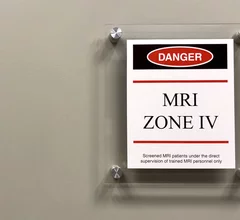
Image Wisely rolls out new MRI safety course following slew of accidents

The course’s release follows numerous reported MRI accidents that have occurred in recent years, many that resulted in severe injury and some that were even fatal.

Thumbnail

CT angiograms help providers 'cut to the chase' when triaging severe headaches in the ED

In the past, when initial CT scans didn’t uncover anything suspicious, patients were often referred for a lumbar puncture to check for blood in their spinal fluid. But those recommendations have started to change.

Alzheimer’s imaging experts to assess utility, efficiency of Hyperfine’s Swoop system

Is portable MRI suitable for finding abnormalities in the brains of patients receiving new amyloid-targeting therapy for Alzheimer’s disease? Clinical researchers are about to find out.

Thumbnail

How radiologists can help patients quit smoking

There are still nearly 30 million people who actively smoke in the United States.

interstitial lung disease reporting data system

Lung disease reporting system improves consistency—so why is it underutilized?

ILD-RADS was developed to address issues with inconsistency when reading high-resolution CT scans of the lungs in patients with a suspected interstitial lung disease.