Medical Imaging

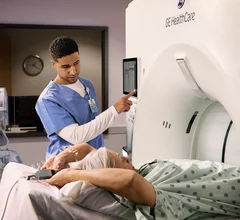
Physicians utilize medical imaging to see inside the body to diagnose and treat patients. This includes computed tomography (CT), magnetic resonance imaging (MRI), X-ray, ultrasound, fluoroscopy, angiography,  and the nuclear imaging modalities of PET and SPECT. 

The rapid rise of artificial intelligence (AI) has helped cardiologists, radiologists, nurses and other healthcare providers embrace precision medicine in a way that ensures more heart patients are receiving personalized care.

FDA clears AI platform for planning ahead of TAVR, other heart procedures

The cloud-based platform identifies and measures cardiac structures in CT scans.

Cardiac PET on the rise among U.S. cardiologists

SPECT is still the most common modality used to evaluate CAD patients, but cardiac PET is gaining more and more momentum.

Thumbnail

Novel radiotracer could improve the diagnosis of interstitial lung disease

Researchers are hopeful that uptake of the molecular SPECT imaging agent will help providers more ably monitor disease progression.

SCCT 2024-2025 President Maros Ferencik (right) shared an office with SCCT's first president Stephan Achenbach (left) in 2002.

New SCCT president takes office, lists priorities

Maros Ferencik, MD, noted that the Society of Cardiovascular Computed Tomography represents specialists from many different specialties, including cardiology, radiology and beyond. 

Thumbnail

Polaris Dawn astronauts will undergo brain MRIs upon landing

The scans will be conducted earlier than any other post-flight imaging of astronauts on record. 

Debra L. Monticciolo, MD, FACR, FSBI, past-president of both the Society of Breast Imaging (SBI), and the American College of Radiology (ACR), explains the advances in breast screening technology and the positives and negatives of each and how artificial intelligence might be able to play a role to ease workflows.

The pros and cons of current breast screening modalities and the role of AI

Debra L. Monticciolo, MD, past president of both the Society of Breast Imaging and the American College of Radiology, explains the advantages and disadvantages of current breast screening technology.

CT scans highlight impact of semaglutide on body composition

Body composition metrics derived from CT scans provide greater insight into how losing weight affects the body from a cardiometabolic perspective.

The American Society of Echocardiography (ASE) has shared new recommendations for performing medical imaging exams on heart failure patients with surgically implanted left ventricular assist devices (LVADs) and temporary mechanical circulatory support (TMCS) devices. The guideline, published in full in the Journal of the American Society of Echocardiography, represents ASE’s first update on the topic since 2015.[1]

ASE shares new guideline on imaging patients with implanted devices

The new guideline details the best imaging strategies for a variety of clinical scenarios.