Medical Imaging

Physicians utilize medical imaging to see inside the body to diagnose and treat patients. This includes computed tomography (CT), magnetic resonance imaging (MRI), X-ray, ultrasound, fluoroscopy, angiography,  and the nuclear imaging modalities of PET and SPECT. 

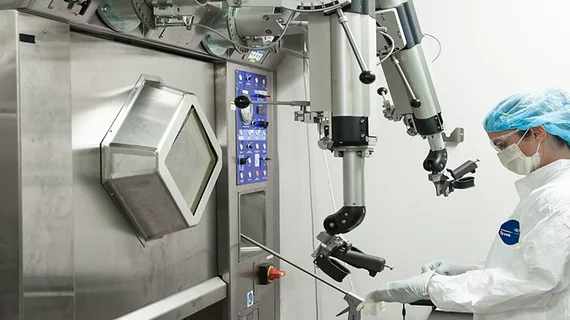
4DMedical lands $100M in new funding to scale functional lung imaging technology

The company announced the funding on Monday, citing the U.S. Food and Drug Administration’s clearance of its CT:VQ platform as the driver. 

heart doctor cardiologist

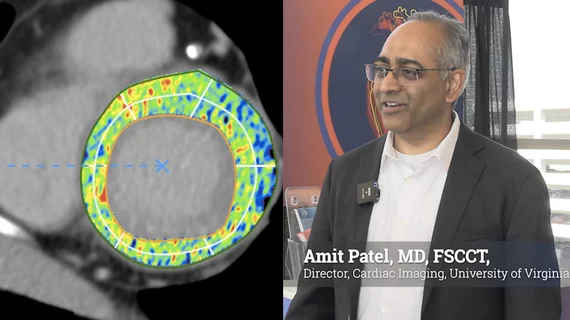
Routine MRI measurements as accurate as invasive testing for heart failure

New findings suggest that measurements of blood oxygen acquired via T2 mapping during routine MRI scans could provide the same information on heart health as catheterization procedures.  

Thumbnail

Siemens Healthineers' partnership sets sights on point-of-care testing for athletes

On-the-field imaging helps determine if athletes can be treated effectively on-site or whether they might need to be transferred to a medical center for additional care. 

Imagers reviewing flurpiridaz F-18 (Flyrcado) myocardial perfusion PET images. Image from GE Healthcare

ASNC says PET is now the preferred nuclear imaging test for CAD

Which imaging modality is better for evaluating heart patients, PET or SPECT? After years of discussions and debates, the American Society of Nuclear Cardiology is now ready to point to PET as the No. 1 choice. “There are no clinical scenarios or patient subgroups where cardiac PET with myocardial blood flow should be excluded," the group wrote.

Samir B. Pancholy, MD, chief interventional cardiologist, Wayne Memorial Hospital in Honesdale, Pennsylvania, discusses the differences in the business models for office based labs (OBL) vs ambulatory surgical centers (ASC) and choosing the right model cardiovascular and vascular procedures. #TCT #SCAI #OBL #ASC

Cardiologist highlights key differences between OBLs and ASCs

Current payment policies have health systems and physicians all over the country looking to learn more about these two business models. 

money dollar funding fundraising artificial intelligence AI

Artificial intelligence helps assign CPT codes for interventional radiology procedures

Translating procedures into standardized billing codes can be an arduous task, but researchers believe large language models offer an opportunity to simplify this work. 

Thumbnail

Some patients more prone to MRI motion, with key implications for scheduling, procedure prep

Movement during these exams can have downstream consequences such as diagnostic uncertainty, higher costs from repeat scans, and delayed clinical decision-making. 

breast ultrasound biopsy

Handheld breast ultrasound bests automation in 2nd-look lesion detection

There is limited research comparing HHUS and ABUS in second-look settings despite the fact that these exams are routinely utilized as supplemental imaging tools.