If passed, new bipartisan legislation would allow eligible residents and interns to defer interest accrual on any federal student loans during their required postgraduate training. The bill has support from more than 40 U.S. healthcare organizations, including SCAI, ACC and STS.
New research details how artificial intelligence can be harnessed to improve radiology resident education by identifying shortfalls in clinical exposure and reinforcing missed concepts.
The role was designed to assist with rising caseloads as an attempt to maintain both patient safety and resident well-being, according to new research.
When resident teams included experienced fourth-year trainees, the resident/attending pairs cut overall median report turnaround times by seven minutes versus attending-only efforts.
Out of 10 mock exams, the AI candidate passed two, achieving an overall accuracy of 79.5%, suggesting that the candidate is not quite “ready to graduate.”
A population-level study featuring multi-organ MRI has confirmed that problems in any of three major organs—the heart, brain or liver—tend to co-occur with unfavorable findings in either or both of the other two.
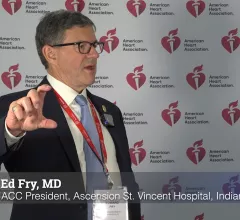
ACC President Edward T.A. Fry, MD, explains the need to better develop the cardiology workforce as the subspecialty faces a looming shortage of cardiologists.