Informatics

The goal of health informatics systems is to enable smooth transfer of data and cybersecurity across the healthcare enterprise. This includes patient information, images, subspecialty reporting systems, lab results, scheduling, revenue management, hospital inventory, and many other health IT systems. These systems include the electronic medical record (EMR) admission discharge and transfer (ADT) system, hospital information system (HIS), radiology picture archiving and communication systems (PACS), cardiovascular information systems (CVIS), archive solutions including cloud storage and vendor neutral archives (VNA), and other medical informatics systems.

Patricia Balthazar, MD, MPH, is an Assistant Professor of Radiology and Imaging Sciences at Emory University School of Medicine, Divisions of Abdominal Imaging and Imaging Informaticsm explains if AI in radiology is a friend foe or time thief.

What makes AI a friend, foe or time thief in radiology?

Patricia Balthazar, MD, Emory University School of Medicine, says radiology AI needs to be monitored to ensure it is performing as it is supposed to and not wasting time and money.

Christoph Wald, MD, MBA, FACR, vice chair of the American College of Radiology (ACR) Board of Chancellors, professor of radiology and senior associate consultant for radiologist at Mayo Clinic, explains the ACR resources available to radiology practices to better evaluate artificial intelligence imaging algorithms.

American College of Radiology offers cybersecurity resources

Christoph Wald, MD, vice chair of the American College of Radiology Board of Chancellors, explains the resources available to practices looking to bolster cybersecurity.

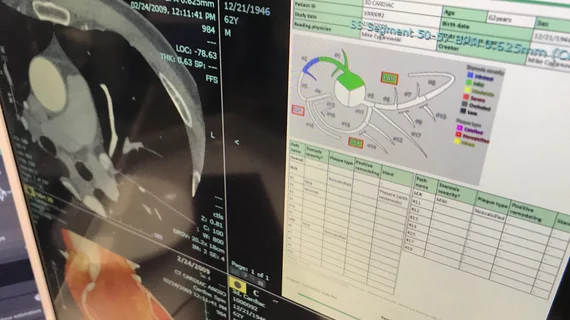
Workflow efficiencies and automation enhance newer cardiovascular IT systems

9 ways cardiovascular IT systems can improve your day-to-day workflow

Bringing in a new and improved cardiovascular IT system can save physicians a ton of time and lead to considerable cost savings.

The Society for Cardiovascular Angiography and Interventions (SCAI) is urging federal policymakers to ensure physicians play a central role in guiding the integration of artificial intelligence (AI) into clinical care, while also raising questions about liability as the technology expands across healthcare.

AI is transforming patient care—and cardiologists have a critical role to play

While the Trump administration is pushing to accelerate clinical AI adoption, SCAI has emphasized that physicians must guide how the technology is implemented and governed.

artificial intelligence AI policy washington capitol

Cardiology groups to Trump administration: AI still has a long way to go

Multiple cardiology societies responded to an HHS request for public feedback by outlining some of the current barriers to wider AI adoption. "It is essential that any policy frameworks must reaffirm that clinicians—not algorithms—remain at the center of patient care," ACC President Christopher Kramer, MD, said. 

Alex Towbin, MD, FAAP, FACR, FSIIM, Society for Imaging Informatics (SIIM) chair-elect, associate chief medical information officer, Department of Radiology at Cincinnati Children's Hospital, and Sylvia Devlin MS, RT, CIIP, FSIIM, SIIM treasurer and director of customer success imaging informatics, Radiology Partners, explain the big IT trends they saw across the vendors at RSNA 2025.

Key radiology IT trends worth watching

In this video interview, Society for Imaging Informatics in Medicine leaders discuss some of the biggest imaging IT trends emerging in 2026. 

Alex Towbin, MD, FAAP, FACR, FSIIM, SIIM chair-elect, radiologist, associate chief medical information officer, associate chief, Department of Radiology, and the Neil D. Johnson Chair of radiology informatics, Cincinnati Children's Hospital, and Sylvia Devlin MS, RT, CIIP, FSIIM, SIIM treasurer and director of customer success imaging informatics, Radiology Partners, explain how SIIM helps make clinician imaging informatics champions.

SIIM offers opportunity for imaging information champions

Education through the organization provides the knowledge needed for clinicians to work with IT teams to implement major system projects.

2026 Best in KLAS rankings examine cardiovascular information systems, hemodynamic solutions

The annual rankings, based on survey responses and interviews, include a fresh look at some of most important tools in cardiovascular care.