PACS

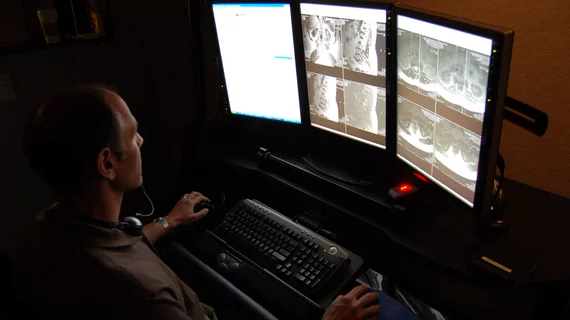
Picture archiving and communication systems (PACS) have replaced conventional radiographic films as the digital image-viewing hub over the past two decades and now serve as the primary communication bridge between radiologists, radiologic technologists and referring providers. PACS enables all authorized clinicians to access medical images and reports quickly, easily and from virtually any location. Some health systems have integrated PACS into the electronic medical record (EMR). Others have moved to enterprise image systems to replace radiology PACS and allow all departments to now store images and reports in one location for easier health system-wide access.

PACS Software Effective In Generating ADC Measurements, Study Reveals

While specialized workstations have traditionally been used to generate apparent diffusion coefficient (ADC) measurements necessary for quantitative analysis of diffusion-weighted MR imaging (DWI-MR), PACS software works equally well in accomplishing this task, according to a study conducted by a research team from the Department of Radiology of

Interpreting From Multiple Facilities: The Case for a PACS-driven Workflow

Sponsored by FUJIFILM Healthcare Americas

For the first five years of its existence, Tower Saint John’s Imaging, a full-service outpatient imaging center in Santa Monica, California, that is a joint venture between Saint John’s Health Center and Tower Imaging Medical Group, used its own RIS, PACS, and speech-recognition products separate from those of Saint John’s Health Center. The same

RadNet Acquires PACS Vendor

RadNet, Inc, which operates 191 fixed-site imaging centers in six U.S. states, has executed a definitive agreement to acquire eRAD, Inc parent company Image Medical Corp. for $10.75 million. eRAD provides PACS and related workflow solutions to more than 250 hospitals, teleradiology businesses, imaging centers and specialty physician groups.

Debunking the Primary Myths of PACS

Sponsored by FUJIFILM Healthcare Americas

The road to PACS perfection is paved with distractions and pitfalls, Paul Chang, MD, FSIIM, says. Chang is professor of radiology, vice chair of radiology informatics, and medical director of enterprise imaging at University of Chicago Medical Center in Illinois. During the 2010 Dwyer Lecture, “The Role of Imaging Informatics in the Next Generation

Have RIS/PACS, Will Travel

Sponsored by FUJIFILM Healthcare Americas

For over thirty years, Radiation Physics Inc (Beltsville, Maryland) has been providing mobile imaging services to the Baltimore and Washington, DC, metropolitan areas, serving long-term–care and assisted-living clients, as well as prisons and private residences. “We started doing this in 1976, and the business model has been pretty much the same

Academic PACS: It’s Not Elementary, Watson

Sponsored by FUJIFILM Healthcare Americas

In the late 1990s, Yale School of Medicine, New haven, Connecticut, implemented its first PACS. James Brink, MD, chair of the department of radiology and professor of diagnostic radiology, recalls how radiologists initially adapted to the brave new digital world: “It took some of the more senior radiologists a while to get used to using a cine

Toward True Globalization: The Air Force and PACS

Sponsored by FUJIFILM Healthcare Americas

Sharing images across any health care enterprise represents a challenge, but doing so across the Pacific Rim was the dilemma faced in 2003 by the US Air Force. Taking up this challenge were Lt Col Grant Tibbetts, MD, now radiology consultant to the surgeon general, and Tom Lewis, the director of the Air Force PACS Office. “The largest hospital in

PACS Nirvana: University Radiology's Reporting-driven Workflow

Sponsored by FUJIFILM Healthcare Americas

Ever since digital imaging liberated radiologists from the site of image acquisition, radiology practices have labored to patch together distributed reading solutions that would efficiently meet the needs of multiple clients, balance workflow, and enable subspecialization.