Stroke

Cardiovascular departments are playing a role in stroke interventions at numerous health systems, working as part of the stroke care team with neurologists, radiology and the emergency department. Stroke first has be be classified as ischemic or hemorrhagic. These have very different care pathways. Ischemic strokes are increasingly being treated with neurological-interventional therapy that includes catheter based mechanical thrombectomy to remove the clot. This is a more aggressive treatment compared to traditional IV administration of tissue plasminogen activator (tPA) thrombolytic therapy to dissolve the clot. Subarachnoid hemorrhage (SAH) and  intracerebral hemorrhage (ICH) brain bleeds can also be treated in some cases stent flow diverters and embolization coils. 

4 key takeaways from ISC 2023: AFib detection, improved stroke survival and more

Leading stroke specialists from all over the world gathered in Dallas for the 2023 International Stroke Conference. Catch up on some of the biggest stories that came out of the three-day event. 

An example of artificial intelligence (AI) automated detection of a intracranial hemorrhage (ICH) in. a CT scan used to send alerts to the stroke acute care team before a radiologist even sees the exam. Example shown by TeraRecon at RSNA 2022.

FDA has now cleared more than 500 healthcare AI algorithms

More than 500 clinical AI algorithms have now been cleared by the FDA, with the majority just in the past couple years.

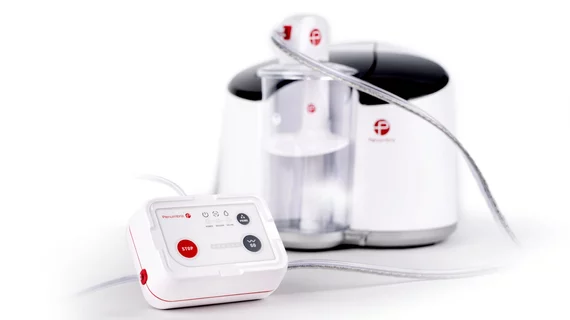
Samir Kapadia, MD, chairman of the Robert and Suzanne Tomsich Department of Cardiovascular Medicine, Sydell and Arnold Miller Family Heart, Vascular and Thoracic Institute at Cleveland Clinic, explains why he believes the results of the late-breaking PROTECTED TAVR testing the use of a TAVR cerebral protection device were positive, although it did not meet its primary endpoint.

VIDEO: Exploring the use of cerebral protection devices during TAVR

Samir Kapadia, MD, chair of the department of cardiovascular medicine at Cleveland Clinic, shared his perspective on the use of cerebral protection devices during TAVR procedures. 

#CTA #acuteischemicstroke #AIS #radiomics

CTA-based radiomics can reliably estimate time since stroke onset

Radiomics features could be especially useful for determining TSS in scenarios where clinical data is lacking or unreliable, such as when patients have altered mental status.

Thumbnail

AHA: ‘Mini strokes’ need emergency assessment, may require hospitalization

Even if symptoms disappear quickly, a transient ischemic attack can be a major short-term risk indicator.

Stroke patients with AFib face a higher mortality risk after thrombectomy

A comparative meta-analysis found similar procedural outcomes, but higher 90-day mortality—partially attributable to a higher rate of comorbidities.

Thumbnail

Black stroke patients hospitalized longer than white patients

Even after adjusting for factors such as income, comorbidities and stroke severity indicators, a prolonged length of stay was more common for Black patients.

An example of artificial intelligence (AI) automated detection of a intracranial hemorrhage (ICH) in. a CT scan used to send alerts to the stroke acute care team before a radiologist even sees the exam. Example shown by TeraRecon at RSNA 2022.

VIDEO: Radiology AI aids acute care and other departments

Sanjay Parekh, PhD, senior market analyst with Signify Research, explains how some radiology AI is being adopted outside of radiology departments to improve care.