Interventional Cardiology

This cardiac subspecialty uses minimally invasive, catheter-based technologies in a cath lab to diagnose and treat coronary artery disease (CAD). The main focus in on percutaneous coronary interventions (PCI) to revascularize patients with CAD that is causing blockages resulting in ischemia or myocardial infarction. PCI mainly consists of angioplasty and implanting stents. Interventional cardiology has greatly expanded in scope over recent years to include a number of transcatheter structural heart interventions.

SCAI President Sunil Rao, MD, explains the 2022-2023 SCAI accomplishments to improve interventional cardiology.

SCAI President Sunil Rao on how the society is helping advance interventional cardiology

Rao spoke with Cardiovascular Business at ACC.23 to detail some of SCAI's biggest accomplishments from the last year. 

Cardiologist Azeem Latib

Cardiologist Azeem Latib joins Supira Medical

The interventional cardiologist is now working with vendor Supira Medical to help advance the company's next-generation percutaneous ventricular assist device.

SCAI President Sunil Rao explains what he saw as the top 5 interventional studies at ACC23. #SCAI #ACC #ACC23

5 studies that could make a big impact on interventional cardiology

SCAI President Sunil Rao, MD, spoke with us about some of the key interventional cardiology studies presented at ACC.23 in New Orleans. 

Thumbnail

New minimally invasive CLTI treatment helps save patients from amputation

The study’s primary endpoint, amputation-free survival after six months, was seen in 66.1% of CLTI patients who underwent transcatheter arterialization.

PCI

Transradial access should be ‘default strategy’ for PCI, new study confirms

Researchers explored data from nearly 25,000 PCI procedures, tracking the outcomes of patients treated with transradial access and transfemoral access. 

Images from the consensus document showing the proper left atrial appendage (LAA) sizing assessment for a transcatheter occluder device using transesophageal echo (TEE). Sizing and evaluation for pre-existing thrombus in the LAA also can be performed using cardiac CT.

SCAI and HRS release expert consensus on transcatheter left atrial appendage occlusion

One of the new recommendations is to conduct baseline imaging with TEE or cardiac CT.

Thumbnail

Why women with peripheral artery disease are underdiagnosed, have worse outcomes

Using the World Health Organization’s model for analyzing gender-related healthcare needs, the authors of a new analysis aimed to explore disparities in PAD outcomes.

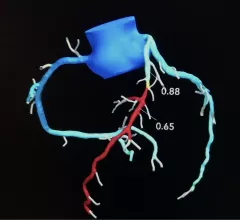
Example of an FFR-angio image-derived hemodynamic flow model performed tableside in the cath lab reconstructed using three different C-arm contract image acquisitions. This technology from CathWorks, which was recently acquired by Medtronic, can eliminate the need for pressure wires and adenosine to assess FFR pressures. These measurements are used to determine the hemodynamic significance of a stenosis and determine if a stent is necessary or if a patient can be treated medically.

PHOTO GALLERY: ACC.23 in New Orleans

Browse a selection of photos from the American College of Cardiology's annual meeting in New Orleans. The pictures highlight key moments, new technologies and much more from the big show.