Interventional Cardiology

This cardiac subspecialty uses minimally invasive, catheter-based technologies in a cath lab to diagnose and treat coronary artery disease (CAD). The main focus in on percutaneous coronary interventions (PCI) to revascularize patients with CAD that is causing blockages resulting in ischemia or myocardial infarction. PCI mainly consists of angioplasty and implanting stents. Interventional cardiology has greatly expanded in scope over recent years to include a number of transcatheter structural heart interventions.


PAD patients face greater risk of death, complications after a heart attack

PAD and CLI patients who show signs of coronary heart disease may benefit from early treatment, according to a new study of nearly 4 million hospitalizations. 

cardiologists going through the certification process

SCAI 2024 Scientific Sessions to focus on TAVR, PAD and other key trends in interventional cardiology

Interventional cardiologists from all over the world will gather for three days of educational sessions, late-breaking presentations, live cases and more. The festivities begin Thursday, May 2, in Long Beach, California. 

Cardiologist Foluso Fakorede, MD, explains the most common health disparities he sees preventing care in rural Mississippi. #PADadvocate #PAD #CLI #CLTI #Healthdisparities #HealthdisparitiesMS

Cardiologist details the many health disparities he encounters in rural Mississippi

Foluso Fakorede, MD, an interventional cardiologist with Cardiovascular Solutions of Central Mississippi, says these issues are typically overlooked in today's healthcare environment. 

doctor patient discharge after heart surgery

Next-day discharge after TAVR with a self-expanding valve: 4 key takeaways

Researchers explored STS/ACR data from nearly 30,000 TAVR patients, presenting their findings in the Journal of the American Heart Association

doctor's open hand waiting for a payment

‘Concerning’ data connect industry payments to cardiologists with medical device use

U.S. physicians often receive payments from medical device manufacturers and pharmaceutical companies. New research in JAMA found a connection between receiving such payments and using specific devices—should the industry be concerned? 

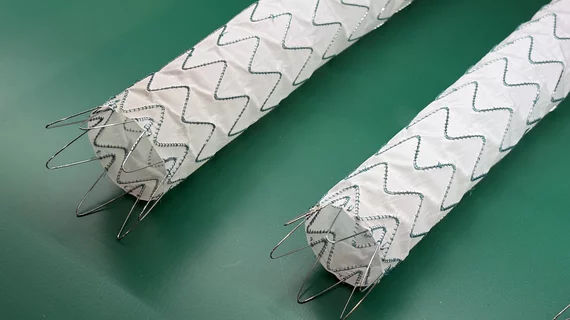
Abbott's Espirit BTK Everolimus Eluting Resorbable Scaffold gained U.S. FDA approval in April 2024. It is based on the former Abbott Absorb coronary stent, but indicated for use in peripheral artery lesions below the knee (BTK).

FDA approves Abbott’s resorbable stent for BTK arteries

The bioresorbable stent, examined at length for the LIFE-BTK clinical trial, stays in place for up to three years before completely dissolving. 

Thumbnail

Society of Thoracic Surgeons launches new risk calculators for SAVR after TAVR, other key heart surgeries

STS risk calculators are known as a go-to resource for cardiologists, surgeons and any other healthcare providers who manage the care of heart patients. 

Confirmed: AFib ablation more beneficial for patients with HFrEF than those with HFpEF

Researchers explored data from nearly 2,500 AFib ablation patients, sharing their findings in JAMA Cardiology.