Compared with postoperative stereotactic radiation therapy, an investigational intraoperative RT approach could significantly reduce local tumor recurrence and improve survival in patients with newly diagnosed operable brain metastases.
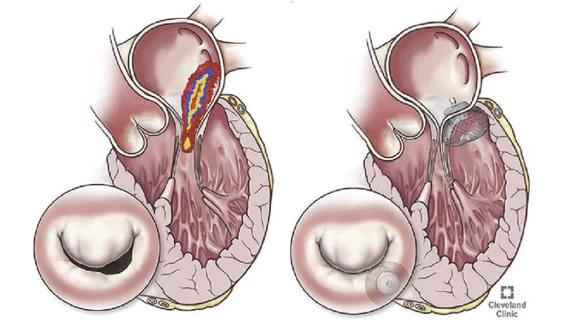
The new device, designed to perform mitral valve repair in patients with functional MR, was co-invented by cardiologist Samir Kapadia, MD, and surgeon Jose Navia, MD.
There were some concerns among researchers after one study suggested iFR may increase the risk of mortality. New data presented at TCT 2023, however, showed that the two technologies are linked to similar outcomes.
Kendra Grubb, MD, one of the country's leading experts on cardiac surgery, discussed what she tells her patients when they ask if TAVR is better than SAVR for treating severe aortic stenosis.
Could this late-breaking clinical trial from TCT 2023 be a sign of things to come in the years ahead? Samir Kapadia, MD, explored the topic in a new interview.
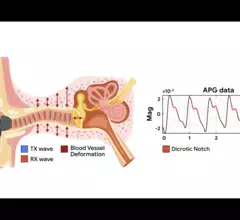
The new technique, audioplethysmography, can monitor a user’s heart rate and other physiological signals using headphones equipped with active noice canceling technology. It requires no additional sensors.