Wearable trackers found that PE patients were more active if they underwent mechanical thrombectomy than if they were just put on anticoagulation therapy alone.
Compared with postoperative stereotactic radiation therapy, an investigational intraoperative RT approach could significantly reduce local tumor recurrence and improve survival in patients with newly diagnosed operable brain metastases.
The FDA-led Sentinel Initiative is tapping Oracle’s life-sciences division, Cerner Enviza, to spearhead development of AI tools for rendering EHR-bound clinical notes as usable pointers for clinicians and researchers.
People suddenly stricken with a cardiovascular crisis often survive and recover as long as they’re transported ASAP to a hospital that has two attributes: expertise in emergency heart care and capacity to accommodate the incoming episode.
In PRF procedures, a probe is used to intermittently apply energy directly to the dorsal root ganglia, which is often where pain and neurologic symptoms associated with sciatica originate.
Researchers at the University of California Los Angeles combined multimodal brain MRIs with clinical and personal data from 183 men and women to identify sex-specific brain signatures that could be indicative of what causes a person to develop obesity.
Most patients who received mechanical ventilation for COVID-19 at a busy European hospital not only survived but also showed no scarring or thickening on lung CT at two years post-discharge.
Eric Secemsky, MD, told Cardiovascular Business that a lack of training is one of the biggest factors limiting the use of intravascular imaging-guided PCI among interventional cardiologists.
Experts recently questioned the necessity of scanning the axilla region during diagnostic breast ultrasound, as new data indicate that it is minimally beneficial for cancer detection.
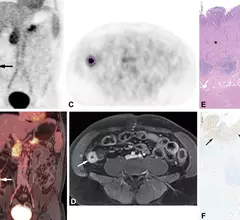
The FAPI radiotracer experts used in this research can bind specifically to the connective tissue cells that cause intestinal wall fibrosis common to Crohn's disease.