Cardiac Imaging

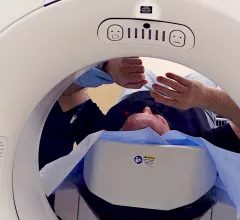
While cardiac ultrasound is the widely used imaging modality for heart assessments, computed tomography (CT), magnetic resonance imaging (MRI) and nuclear imaging are also used and are often complimentary, each offering specific details about the heart other modalities cannot. For this reason the clinical question being asked often determines the imaging test that will be used.

Example of a patient's coronary tree extracted from a cardiac CT scan. CT allows very detailed anatomical imaging and now physiological and plaque information that can be useful in pre-planning interventional procedures. Imaging from the GE Revolution Apex system at SCCT 2022.

VIDEO: CT imaging to plan coronary interventions — Interview with Jonathon Leipsic, MD

Jonathon Leipsic, MD, chairman of the Department of Radiology, University of British Columbia, explains how noninvasive computed tomography angiography (CTA) can be used to aid in planning interventional cardiology procedures for percutaneous coronary intervention (PCI) and chronic total occlusions (CTO). 

Ancora Heart AccuCinch Ventricular Restoration System heart failure FDA

Regulatory Roundup: FDA clears AI-powered Apple Watch competitor, grants breakthrough designation to new heart failure device

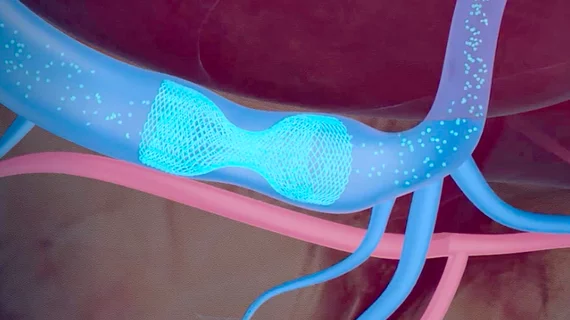
Ancora Heart received the FDA’s breakthrough device designation for its AccuCinch Ventricular Restoration System, a new minimally invasive transcatheter device designed for the treatment of heart failure.

CMR of a patient showing evidence of myocardial hypertrophy

Cardiac MRI findings linked with worse outcomes in hypertension patients

Nonischemic LGE was revealed to be independently associated with worse outcomes in hypertension patients. 

Performing valve-in-valve transcatheter mitral valve replacement (ViV TMVR) with conscious sedation (CS) or monitored anesthesia care (MAC) instead of general anesthesia (GA) is safe and effective, according to new research published in JACC: Cardiovascular Interventions.

Using a TAVR-like minimalist approach for valve-in-valve TMVR is safe and effective, Cleveland Clinic study confirms

During valve-in-valve TMVR, patients are treated with conscious sedation or monitored anesthesia care instead of general anesthesia. This new analysis confirms that the change does not impact patient outcomes, but it was linked to a shorter length of stay.

Left, coronary CT angiography of a vessel showing plaque heavy calcium burden. Right, image showing color code of various types of plaque morphology showing the complexity of these lesions. The right image was processed using the FDA cleared, AI-enabled plaque assessment from Elucid.

Cardiac CT soft plaque assessment may offer paradigm shift for coronary disease screening

New artificial intelligence software that can evaluate coronary CT scans to automatically assess soft plaques were by far the biggest technology advance discussed at the Society of Cardiovascular Computed Tomography (SCCT) 2022 meeting. 

Subclinical leaflet thrombosis after TAVR CT JAMA Cardiology OAC

Subclinical leaflet thrombosis after TAVR: What we know, and still need to learn, about a challenging complication

Treating subclinical leaflet thrombosis after TAVR has been an ongoing challenge for structural heart clinicians, but recent research has gone a long way toward improving our understanding of this important topic. 

New PET imager cleared for U.S. sales

A Canadian manufacturer of positron emission tomography equipment has received FDA’s OK to market a small-footprint scanner that images targeted organs bearing radiotracers at close range.

Eric Williamson, MD, MSCCT, the 2021-2022 president of the Society of Cardiovascular Computed Tomography (SCCT) and professor of radiology at Mayo Clinic, shares his key takeaways from the SCCT 2022 conference. #SCCT #SCCT2022 #yesCCT

VIDEO: Top 6 takeaways from the Society of Cardiovascular CT 2022 meeting

Eric Williamson, MD, MSCCT, the 2021-2022 president of the Society of Cardiovascular Computed Tomography (SCCT) and professor of radiology at Mayo Clinic, shared his key takeaways from the SCCT 2022 conference.