Cardiac PET

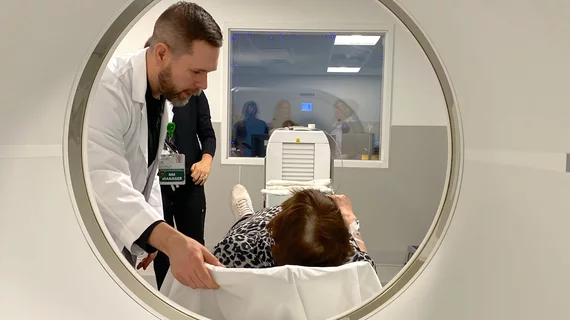
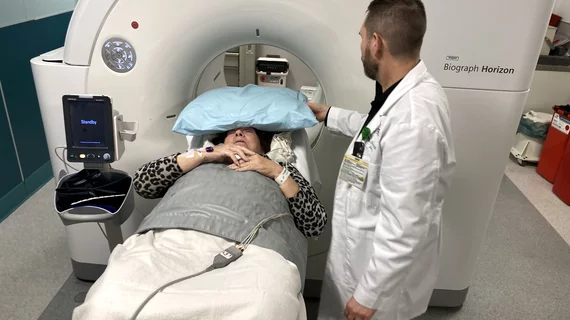
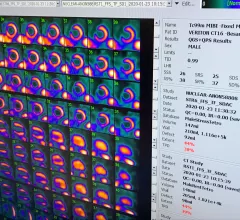
Cardiac positron emission tomography (PET) is a nuclear imaging modality that can show heart cell metabolism that reveals areas of ischemia or infarct where this low or no blood flow due to coronary artery disease and myocardial infarction. PET can help determine in if areas of the heart effected by a heart attack can be reversed through revascularization. PET can also offer additional information on the patient's condition with myocardial flow reserve (MFR) information. Cardiac PET uses a rubidium (Rb-82) radiotracer injection, which only has a half life of 75 seconds, which greatly speeds scan times compared to traditional cardiac SPECT imaging.


This latest shortage involves dobutamine, an injectable medication often prescribed for advanced heart failure and cardiogenic shock. It is also a central component of dobutamine stress echocardiography (DSE), a test used to evaluate patients with severe aortic stenosis.

A new supply issue hits cardiology: 5 recommendations for cardiologists during the dobutamine shortage

The shortage could lead to significant issues for cardiologists. The American College of Cardiology provided some words of wisdom on the ongoing issue.  

U.S. News & World Report children’s hospitals cardiology heart surgery

Lower doses, faster acquisitions: Experts share how to improve PET scans for peds

This week in AJR, experts shared how they were able to reduce FDG PET scan acquisition times by 33%, thus reducing the amount of total radiation exposure to more vulnerable pediatric patients. 

SNMMI Image of the Year 68Ga-FAPI-46 PET/CT heart attack acute myocardial infarction

‘Image of the Year’ highlights the predictive power of a new PET imaging agent

The Society of Nuclear Medicine and Molecular Imaging has chosen its 2022 Image of the Year, and it’s one that is sure to interest anyone in the field of cardiac imaging.

Advnaces in nuclear cardiac imaging include the use of PET, quantitative coronary flow reserve and the additional CT ro SPECT and PERT scans. #ASNC

VIDEO: 2 key advances in cardiac nuclear imaging technology

Randall Thompson, MD, immediate past president of the American Society of Nuclear Cardiology (ASNC), explains two key advances in cardiac nuclear imaging.
 

Humana

Humana agrees to take second look at panned payment change labeling PET/CT as ‘investigational’

The American Society of Nuclear Cardiology recently met with the Louisville, Kentucky, insurer, which shared an openness to reviewing a recent coverage determination. 

Thumbnail

Nuclear medicine, cardio groups reject proposed myocardial PET cuts

Multiple nuclear medicine and cardiology groups are working to oppose potential cuts to myocardial PET scans that were made possible by the CMS 2020 Medicare Physician Fee Schedule (MPFS) proposed rule, according to a joint statement.

Thumbnail

Industry groups oppose proposed myocardial PET cuts

When CMS released the 2020 Medicare Physician Fee Schedule (MPFS) proposed rule, it included revisions that could lead to technical component payment reductions of up to 80% for certain services related to myocardial PET scans.

SNMMI, ASNC encourage BCBS to expand coverage of cardiac PET

The Society of Nuclear Medicine and Molecular Imaging (SNMMI) and the American Society of Nuclear Cardiology (ASNC) submitted a letter to BlueCross BlueShield (BCBS) of Tennessee urging an expansion of cardiac PET coverage.