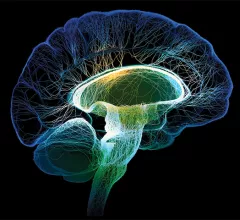
Artificial Intelligence

Artificial intelligence (AI) is becoming a crucial component of healthcare to help augment physicians and make them more efficient. In medical imaging, it is helping radiologists more efficiently manage PACS worklists, enable structured reporting, auto detect injuries and diseases, and to pull in relevant prior exams and patient data. In cardiology, AI is helping automate tasks and measurements on imaging and in reporting systems, guides novice echo users to improve imaging and accuracy, and can risk stratify patients. AI includes deep learning algorithms, machine learning, computer-aided detection (CAD) systems, and convolutional neural networks. 

Thumbnail

FDA approves USC's 7 Tesla MRI for clinical use

The scanner—installed at the University of Southern California’s Mark and Mary Stevens Neuroimaging and Informatics Institute (INI) in February 2017—may help in the development of care, treatment and monitoring of patients with Alzheimer’s disease, multiple sclerosis and other neurological diseases.

Thumbnail

Mayo Clinic teams up with VR training platform

The Mayo Clinic in Rochester, Minnesota, is partnering with FundamentalVR, a virtual reality (VR) training and data analysis technology platform in London, to develop several surgical VR simulation and educational products.

Thumbnail

Simple antenna radio probe can improve MRI resolution

High-resolution MRI machines can achieve greater resolution when radio probes are changed from coils to antennas, reported researchers in a recent study published in Transactions on Microwave Theory and Techniques.

Thumbnail

MRI-trained algorithm can predict breast tumor response to chemotherapy

Using a breast MRI tumor dataset, researchers found a deep learning convolutional neural network (CNN) approach could be trained to predict responses to chemotherapy prior to its initiation, according to a recent Journal of Digital Imaging study.

Thumbnail

Scripps, Nvidia partner to promote use of AI with digital health sensors

Technology company Nvidia is partnering with the Scripps Research Transitional Institute in a push to apply artificial intelligence (AI) with digital health sensor data.

Thumbnail

First neuropathic pain patient in US receives MRI focused ultrasound treatment

A pilot study conducted by researchers at the University of Maryland Medical Center in Baltimore has successfully treated the first U.S. patient using MRI-guided focused ultrasound for chronic neuropathic pain, according to a university press release published Oct. 28.

Thumbnail

ACR’s Allen: Why structured use cases will drive adoption of AI in radiology

The American College of Radiology Data Science Institute (ACR DSI) recently released a series of standardized artificial intelligence (AI) use cases to help advance imaging in AI. Down the road, they could help create an “AI ecosystem” for radiology, wrote Bibb Allen, MD, chief medical officer of the ACR DSI, in a recent Journal of the American College of Radiology editorial.

Thumbnail

3D MR fingerprinting technique shows promise in breast imaging

A team of researchers from Cleveland has developed a three-dimensional (3D) MR fingerprinting method for breast imaging which may better evaluate breast tumors, according to an Oct. 30 study published in Radiology.