Artificial Intelligence

Artificial intelligence (AI) is becoming a crucial component of healthcare to help augment physicians and make them more efficient. In medical imaging, it is helping radiologists more efficiently manage PACS worklists, enable structured reporting, auto detect injuries and diseases, and to pull in relevant prior exams and patient data. In cardiology, AI is helping automate tasks and measurements on imaging and in reporting systems, guides novice echo users to improve imaging and accuracy, and can risk stratify patients. AI includes deep learning algorithms, machine learning, computer-aided detection (CAD) systems, and convolutional neural networks. 

Artificial intelligence in healthcare

Industry Watcher’s Digest

Buzzworthy developments of the past few days.

framework for regulating healthcare artificial intelligence

A framework for regulating healthcare AI at the federal level has begun taking shape

America’s two major political parties agree on very little of late, but they have a mutual interest in working together toward overseeing AI.

Google's latest large language model is poised to give ChatGPT a run for its money in imaging

One of the main goals of Med-PaLM 2 is to “synthesize information like X-rays and mammograms to one day improve patient outcomes.” 

Natural language processing helps increase follow-up imaging adherence, resulting in significant revenue

A new paper details how a team at the University of California utilized a hybrid system consisting of a quality coordinator and NLP software to bring in more than $60,000 in additional revenue from follow-up imaging alone.

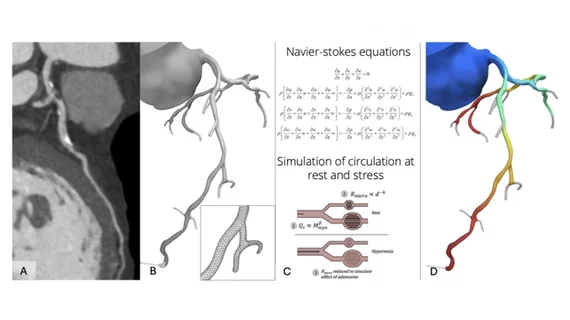
An example of HeartFlow's new RoadMap Stenosis software that uses artificial intelligence (AI) to show areas of interest for possible stenting based on a patient's CT scan and FFR-CT. This software is still undergoing beta testing at several hospitals and will likely be rolled out commercially later in 2023.

Cardiology has embraced AI more than most other specialties

Cardiology is linked to the second largest group of FDA-cleared clinical AI algorithms, and the number is still growing. 

Marcelo DiCarli, MD, chief, division of nuclear medicine and molecular imaging, executive director for the cardiovascular imaging program, Brigham and Women's Hospital, discusses how artificial intelligence (AI) is impacting cardiac imaging.

What is the ROI for adopting AI in cardiac imaging?

Marcelo DiCarli, MD, and Rob Beanlands, MD, discussed the long-term value of investing in the development and implementation of AI technologies. 

IBM WatsonX

Industry Watcher’s Digest

Buzzworthy developments of the past several days.

artificial intelligence warning united nations

Int’l panel: Safeguard human health against AI now—or risk losing the chance forever

As the world grapples with the potential downsides of generative AI, a global group of healthcare researchers is warning of health perils that could emanate from well beyond clinical settings.