Artificial Intelligence

Artificial intelligence (AI) is becoming a crucial component of healthcare to help augment physicians and make them more efficient. In medical imaging, it is helping radiologists more efficiently manage PACS worklists, enable structured reporting, auto detect injuries and diseases, and to pull in relevant prior exams and patient data. In cardiology, AI is helping automate tasks and measurements on imaging and in reporting systems, guides novice echo users to improve imaging and accuracy, and can risk stratify patients. AI includes deep learning algorithms, machine learning, computer-aided detection (CAD) systems, and convolutional neural networks. 

Thumbnail

AI triage software significantly reduces radiology report turnaround times, with a caveat

Researchers with the U.S. FDA recently assessed the impact of one such product for pulmonary embolism, with mixed results depending on the time of day. 

cybersecurity hacker ransomware cyber data breach

AI-driven medical benefits servicer hit with data breach

Healthcare Interactive confirmed the cyberattack in a statement released last week; however the details have yet to be reported to HHS. The incident happened in July. 

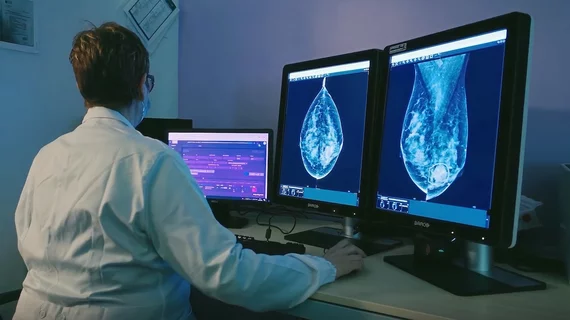
mammogram mammography breast cancer

AI turns mammograms into CVD risk assessments—no outside data required

Thanks to AI, clinicians can use mammograms to do a lot more than identify signs of breast cancer. Researchers explored data from nearly 50,000 patients, presenting their findings in Heart.

Thumbnail

Fewer than 30% of FDA-cleared AI devices share key safety, adverse event info prior to approval

A new analysis is prompting questions regarding how rigorously many of the AI-enabled tools approved by the U.S. Food and Drug Administration are evaluated prior to their clearance. 

robot reviewing heart data

AI delivers helpful heart health advice—but not every time

AI-powered chatbots can be valuable resources when users have questions about cardiovascular health—but they are still far from perfect.

Obesity Paradox Body Mass Index

Does BMI affect AI's accuracy when assessing CT scans?

AI is only as effective as the data it was trained on, and many datasets lack diversity in terms of patient body mass index.

robot surgeon solo AI

Healthcare AI today: Blind prior-auth pilots, sputtering healthtech romance, solo AI surgeons, more

Meet a robot surgeon who could operate on patients with no human in the room. 

Cigna

Cigna will cover CT imaging artificial intelligence software nationwide

The Bloomfield, Connecticut-based payer has committed to covering plaque analysis software offered by several competing vendors including Heartflow.