In 2020, healthcare costs averaged $10,000 per person, though South Dakota takes the cake as the most expensive state for healthcare, according to a recent ranking from Forbes.
While electronically cropping an image may seem like a harmless act, the habit is not without unintended consequences, the authors of a newpaper recently explained.
The state of Texas may have claimed more than $30 million in federal funds for Medicaid uncompensated care payments that didn’t actually meet federal and state requirements.
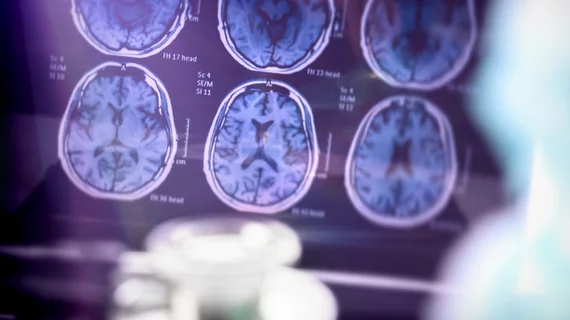
In the case of a convicted murderer, a New York neuro specialist cited a slew of neuroimaging findings that indicate “severe dysfunction” that could have numbed the defendant’s “brakes of inhibition.”
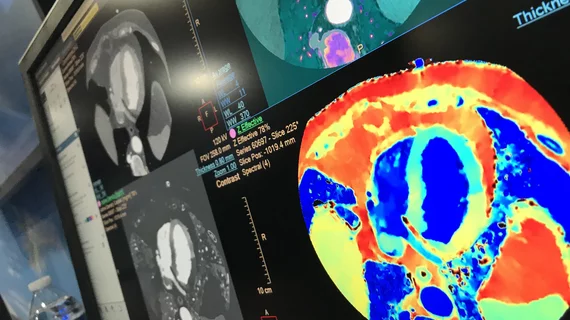
Suhny Abbara, MD, editor of Radiology: Cardiothoracic Imaging and chief of cardiothoracic imaging for University of Texas Southwestern Medical Center, discusses how spectral computed tomography (CT) can help both cardiac and general CT imaging.
Contrary to older research that showed neuroimaging emerging as the single most dominating cost contributor in ischemic stroke care for older Americans, a new study shows treatment and other line items account for bigger slices of the bill.
Pregnant women who felt stressed by healthcare disruptions caused by the COVID-19 pandemic radiated the unease to their developing offspring. The effects were observable on fetal MRI of both brainstem structure and functional activity.
Researchers examined data from more than 1,800 CLTI patients, comparing bypass surgery with minimally invasive treatment options such as angioplasty and stenting.