Home

Deep learning slashes real-world MRI scan times

Accelerated MRI with AI image reconstruction nearly halved orthopedic scan times while maintaining or even improving image quality in a newly published prospective study. 

  • Read more about Deep learning slashes real-world MRI scan times

VIDEO: Pemafibrate does not lower cardiovascular risks in the PROMINENT trial

Peter Libby, MD, a cardiovascular medicine specialist, Brigham and Women’s Hospital, and Mallinckrodt Professor of Medicine, Harvard Medical School, explains the take aways from the PROMINENT trial using pemafibrate to lower cardiovascular risks. The trial, presented at the American Heart Association (AHA) 2022 meeting, did not show reduction in the incidence of cardiovascular events among those who received pemafibrate than among those who received placebo. #AHA #AHA22

Peter Libby, MD, a cardiovascular medicine specialist with Brigham and Women’s Hospital and Harvard Medical School, explained some key takeaways from the PROMINENT trial.

  • Read more about VIDEO: Pemafibrate does not lower cardiovascular risks in the PROMINENT trial

MRI uncovers clues that could help clinicians better understand schizophrenia

Cheryl Petersilge, MD, MBA, with the department of regional radiology at the Cleveland Clinic, examined enterprise imaging—and how radiologists must integrate and collaborate with other departments. Her clinical perspective clinical perspective was published online in the October issue of the American Journal of Roentgenology.

Thanks to functional MRI exams, experts recently gained new insight into mechanisms behind the “loosening of associations” commonly observed in individuals diagnosed with schizophrenia.

  • Read more about MRI uncovers clues that could help clinicians better understand schizophrenia

Uninsured rate dropped during COVID-19 pandemic

insurance payer payment insurer

The uninsured rate in the United States saw a drop from 11.1% in 2019 to 10.5% in 2021, according to a new report from the Department of Health and Human Services (HHS).

  • Read more about Uninsured rate dropped during COVID-19 pandemic

Shockwave Medical to acquire medical device company for $100M

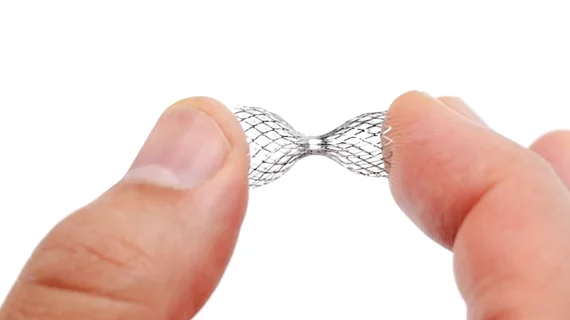
 The Neovasc Reducer System is designed to treat the symptoms of refractory angina by altering a patient's blood flow.
The Neovasc Reducer System is designed to treat the symptoms of refractory angina by altering a patient's blood flow.

Shockwave Medical's decision to acquire Neovasc is based largely on the potential of the Neovasc Reducer System, a solution designed to treat the symptoms of refractory angina by altering a patient's blood flow.

  • Read more about Shockwave Medical to acquire medical device company for $100M

‘Revolutionary’ new CT scans identify the most common cause of high blood pressure

Blood pressure

Primary aldosteronism (PA) is one the single most common causes of hypertension, but identifying patients with PA—and knowing which ones may benefit from a surgical treatment—can be quite challenging.

  • Read more about ‘Revolutionary’ new CT scans identify the most common cause of high blood pressure

New type of PET/CT scan could change how hypertension is diagnosed and treated

Blood pressure

The 10-minute scan can “light up” aldosterone-producing nodules in the adrenal glands following an injection of metomidate—a radioactive dye that binds specifically to aldosterone-producing nodules.

  • Read more about New type of PET/CT scan could change how hypertension is diagnosed and treated

Pfizer expands not-for-profit products initiative

covid_vaccine.jpg
Photo by Nataliya Vaitkevich via Pexels

Pharmaceutical giant Pfizer is expanding its not-for-profit products, widening its existing initiative with the aim of lowering health inequities.

  • Read more about Pfizer expands not-for-profit products initiative

Do non-physician providers request contrast-enhanced imaging more often?

The growing presence of non-physician practitioners has created an increased demand for contrast-enhanced imaging, according to new data.

  • Read more about Do non-physician providers request contrast-enhanced imaging more often?

Abbott receives FDA approval for new self-expanding TAVR system

Abbott has gained U.S. Food and Drug Administration (FDA) approval for its Navitor transcatheter aortic valve replacement (TAVR) system, the company’s new Navitor self-expanding valve for high-risk patients with severe symptomatic aortic stenosis.
Image courtesy of Abbott.

The device, which gained CE mark approval in Europe in May 2021, features a new-look fabric cuff designed to keep the risk of paravalvular leak (PVL) at a minimum.


  • Read more about Abbott receives FDA approval for new self-expanding TAVR system

Pagination

    • First page « First
    • Previous page ‹ Previous
    • Page …953
    • Page 954
    • Page 955
    • Page 956
    • Current page 957
    • Page 958
    • Page 959
    • Page 960
    • Page 961 …
    • Next page Next ›
    • Last page Last »
Subscribe
  • Home
  • News
  • Article Archive
  • Custom Content
  • Webinars
  • Press Releases
  • Content Studio
  • Advertising
  • Submit Press Release
  • Contact Us
  • Terms of Use
  • Privacy Policy
  • Cardiovascular Business
  • HealthExec
  • Radiology Business
 
© 2026 Innovate Healthcare | All Rights Reserved. | Terms of Use | Privacy Policy
 
Design by Adaptive Theme