Experts developed a deep learning model that can estimate breast density

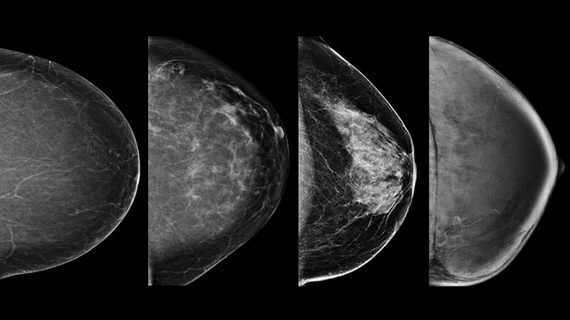
Example of the four types of breast tissue density. The density of fibroglandular tissue inside the breast impacts the ability to easily see cancers. Cancers are very easy to spot in fatty breasts, but are almost impossible to find in extremely dense breasts. These examples show craniocaudal mammogram findings characterized as almost entirely fatty (far left), scattered areas of fibroglandular density (second from left), heterogeneously dense (second from right), and extremely dense (far right). RSNA

Example of the four types of breast tissue density. The density of fibroglandular tissue inside the breast impacts the ability to easily see cancers. On X-ray mammography, cancer and dense breast tissue both appear as white and can hide smaller cancers on 2D mammography. Dense breasts are also a risk factor for cancer. Cancers are very easy to spot in fatty breasts, but are almost impossible to find in extremely dense breasts. These examples show craniocaudal mammogram findings characterized as almost entirely fatty (far left), scattered areas of fibroglandular density (second from left), heterogeneously dense (second from right), and extremely dense (far right). Read more. Image courtesy of RSNA


When tested, the model achieved a performance comparable to that of human experts.

HeartFlow raises $215M to keep up with growing demand

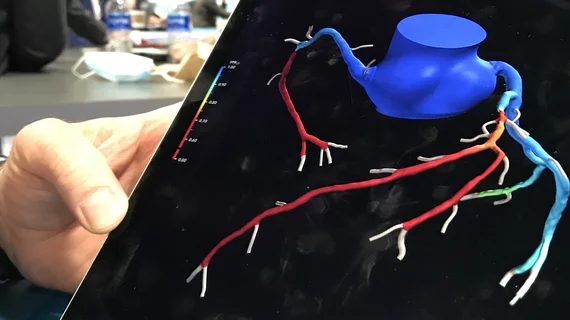
An example of the FFR-CT technology from Heartflow. The vendor's AI can take a patient's cardiac CT scan and non-invasively assess FFR hemodynamic flow for all the coronary arteries to determine if blockages are significant enough to require revascularization. Photo by Dave Fornell

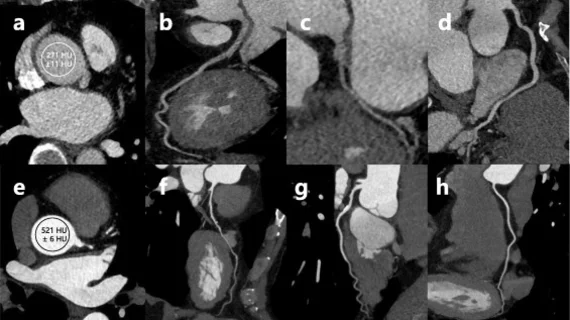
An example of the FFR-CT technology from Heartflow. The vendor's AI can take a patient's cardiac CT scan and non-invasively assess FFR hemodynamic flow for all the coronary arteries to determine if blockages are significant enough to require revascularization.  

The company is still riding the momentum of its technology being included in the 2021 American College of Cardiology/American Heart Association chest pain guidelines.