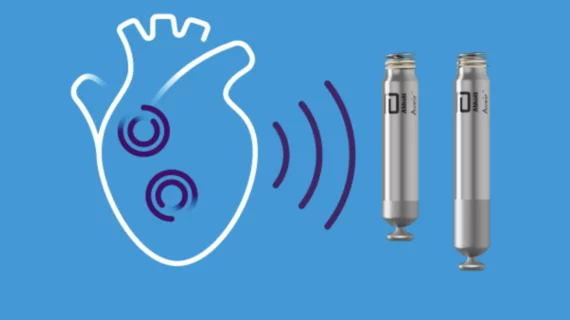
The minimally invasive system is made up of two pacemakers that send signals back and forth to one another. One pacemaker is placed on the patient's right ventricle, and the other is placed on the patient's right atrium.
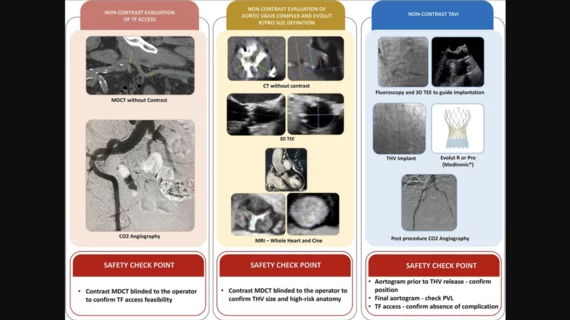
TAVR with zero-contrast strategy using the self-expandable Evolut R/Pro THV in patients with chronic kidney disease. Images courtesy of Freire et al. and Frontiers in Cardiovascular Medicine.
Researchers think this new technique could be beneficial for patients presenting with both severe symptomatic aortic stenosis and chronic kidney disease.
American war veterans take their own lives at a rate much higher than the civilian average. Might AI help formulate some sort of solution? The week of Independence Day seems a fitting time to consider the possibility.
And the improved scan times did not come at the expense of image quality but, instead, offered improved signal-to-noise ratio, according to a new study in Skeletal Radiology.
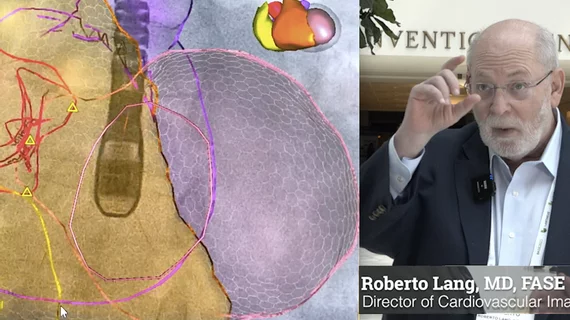
Echocardiography expert Roberto Lang, MD, says artificial intelligence will be so important to cardiac ultrasound in the near future that echo labs not using it will be inefficient and less accurate than labs that do use it.
Automated phone trees are a cost-effective means of reducing unnecessary interruptions and can be implemented “in an easily accessible manner,” according to experts at University Hospitals Cleveland Medical Center.