Rep. Greg Murphy, MD, R-N.C., unveiled the No Surprises Enforcement Act on Sept. 13, joined by Reps. Raul Ruiz, MD, D-Calif., and John Joyce, MD, R-Penn.
Continued declines in reimbursement and mounting administrative burdens are combining to weigh down members of the specialty, RP wrote in recent comments.
The study from the American Medical Association is based on data from commercial and Medicare Part D plans. The analysis found market share for PBMs is heavily concentrated, leading to higher drug costs.
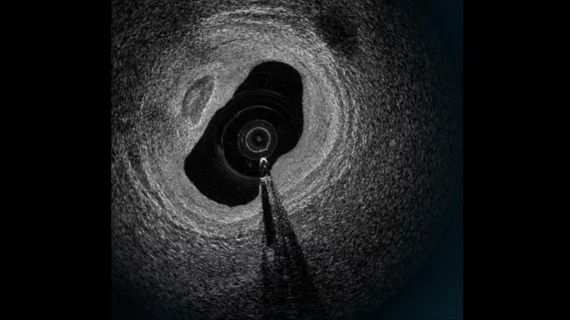
The HyperVue system uses both DeepOCT and near infrared spectroscopy (NIRS) imaging to help guide stent placement during interventional cardiology procedures.
The funds, including a significant investment from Johnson & Johnson, are expected to go toward expanding access to the company's HyperVue Imaging System and exploring new features.
Although LLMs have seen rapid advancement in recent years, they still cannot compare to human radiologists when it comes to staging cancer using free text reports.
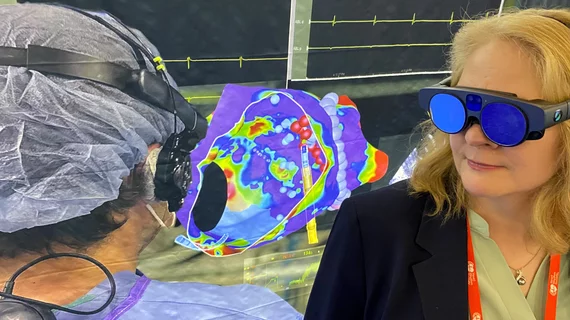
A demonstration of SenitAR's augmented reality (AR) technology for electrophysiology lab procedures during the Heart Rhythm Society 2024 meeting. This is one of at least six FDA-cleared clinical AR and virtual reality applications aimed at enhancing cardiology workflow and patient outcomes. Photo by Dave Fornell.
Heart teams already have access to several augmented reality and virtual reality offerings, and many more are on the way.
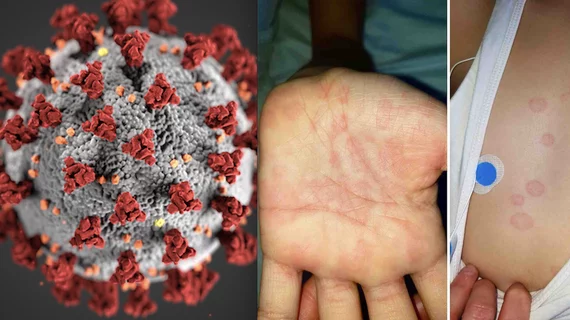
MIS-C is caused by exposure to the SARS-CoV-2 virus and includes skin rashes and can cause inflammation of the heart and other organs.
The rise of MIS-C during the COVID-19 pandemic alarmed physicians and patients alike, and the exact cause was unclear. Now, new NIH-funded research appears to provide some answers.