FDA clears new software for AI-powered CCTA assessments

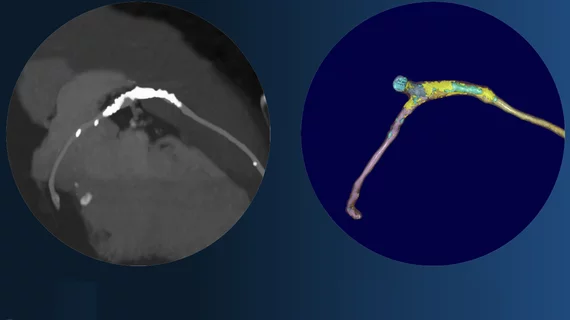
Left, coronary CT angiography of a vessel showing plaque heavy calcium burden. Right, image showing color code of various types of plaque morphology showing the complexity of these lesions. The right image was processed using the FDA cleared, AI-enabled plaque assessment from Elucid.

Elucid's AI analysis software in action. The left image shows coronary CT angiography of a vessel showing plaque heavy calcium burden. The right image, processed by Elucid's software, highlights the various types of plaque morphology of these lesions.


Elucid's PlaqueIQ was trained to turn CCTA images into interactive 3D reports that help physicians visualize the presence of atherosclerosis.

New-look TAVR valve recently acquired by Edwards may reduce risk of coronary obstruction

Performing transcatheter aortic valve replacement (TAVR) with the J-Valve transcatheter heart valve (THV) may help limit the risk of coronary artery obstruction (CAO) in high-risk patients, according to a new study published in Clinical Interventions in Aging.[1]

The J-Frame TAVR valve. (A)The prosthesis consists of a frame and 3 “U-shaped” claspers. (B) The crown-like frame. (C) Connection between the frame and the claspers. Images and captions courtesy of Clinical Interventions in Aging.

Early data suggest the J-Valve transcatheter heart valve could help care teams avoid a rare, but often fatal TAVR complication when treating high-risk patients.