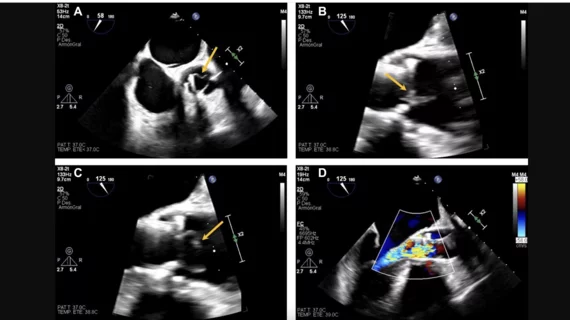
Image and captions courtesy of Vila-García et al. and JACC: Cardiovascular Interventions. (A) Transesophageal echocardiography (TEE), midesophageal short-axis view. The arrow indicates the tear in the noncoronary leaflet. (B) TEE, midesophageal long-axis view with zoom at the TAVR. The arrow indicates the tear in the leaflet in diastole. (C) TEE, midesophageal long-axis view with zoom at the aortic valve. The arrow indicates the tear in the leaflet in systole. (D) TEE, midesophageal long-axis view. The wide color jet suggests severe aortic regurgitation.