Home

How Huntington’s disease alters whole-brain connectivity

Researchers have linked specific gene mutations and brain function in Huntington’s disease (HD) patients by comparing trinucleotide (CAG) repeats with whole-brain connectivity via functional MRI (fMRI). Examining disease carriers and health controls, the researchers found CAG repeat length inversely correlates with an individual’s age at onset.

  • Read more about How Huntington’s disease alters whole-brain connectivity

When CT scans are negative for patients with blunt neck injuries, follow-up MRI provides little value

When patients experience blunt neck injuries—after a car accident, for example—follow-up MRI is not necessary after a CT scan comes back negative for spine instability, according to a new study published in JAMA Surgery.

  • Read more about When CT scans are negative for patients with blunt neck injuries, follow-up MRI provides little value

LGB adults have poor cardiovascular health compared to heterosexual counterparts

e.jpg

Lesbian, gay and bisexual adults are likely to have poor cardiovascular health compared to heterosexual counterparts, according to findings presented March 20 at the American Heart Association’s Epidemiology and Lifestyle conference in New Orleans.

  • Read more about LGB adults have poor cardiovascular health compared to heterosexual counterparts

Konica Minolta’s Exa Platform Helps Green Bay Radiology Grow While Streamlining Operations

Starting salaries for specialist physicians have mostly increased over the last year. Demand for those specialists is also on the rise. What are doctors paid? What is the average salary of a doctor, physician?

Konica Minolta Healthcare Americas, Inc. announces that Green Bay Radiology installed Konica Minolta’s Exa™ PACS at several of its partner facilities in northeastern Wisconsin.

  • Read more about Konica Minolta’s Exa Platform Helps Green Bay Radiology Grow While Streamlining Operations

Apixaban equally safe as warfarin for anticoagulation during AFib ablation

Continuous anticoagulation with apixaban during atrial fibrillation (AFib) ablation was found to be as safe as warfarin and other vitamin K antagonists (VKAs) in a randomized trial of 633 patients.

  • Read more about Apixaban equally safe as warfarin for anticoagulation during AFib ablation

Tissue-clearing method for 3D imaging brain tissue may offer new health, disease insights

Microscope

A team of international researchers has developed new tissue-clearing protocols for the 3D imaging of human brain tissue that may help answer questions around microstructural anatomy.

  • Read more about Tissue-clearing method for 3D imaging brain tissue may offer new health, disease insights

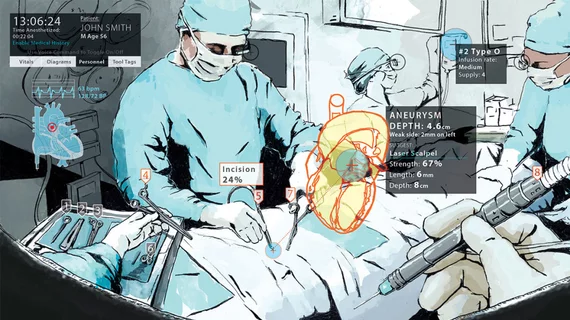
Augmented reality could turn surgery into 3D experience, increase patient safety

arillustrationslr-medical-1200-1024x576.jpg

Photo courtesy of The Augmentarium at the University of Maryland. 

Applying augmented reality (AR) to surgery may ultimately decrease medical errors made both inside and outside the operating room, according to an article published online by Harvard Business Review.

  • Read more about Augmented reality could turn surgery into 3D experience, increase patient safety

Is cardiology ready for the PCSK9 inhibitor era? Some don’t think so

The case for PCSK9 inhibitors is strong following the American College of Cardiology’s 67th annual symposium in Orlando, Florida, but some physicians remain wary of the medication, citing gaps in clinical evidence and questioning if cardiology is ready for the widespread distribution of such pricey drugs.


  • Read more about Is cardiology ready for the PCSK9 inhibitor era? Some don’t think so

Freezing a specific nerve can help patients lose weight

Freezing the posterior vagal trunk, the nerve that sends hunger-related signals to the brain, could help patients with mild-to-moderate obesity lose weight, according to research presented at the Society of Interventional Radiology (SIR) annual meeting in Los Angeles.

  • Read more about Freezing a specific nerve can help patients lose weight

New renal CTA protocol results in improved findings with less contrast medium

Renal computed tomography angiography (CTA) is an effective resource for radiologists with numerous benefits, but it requires the application of contrast medium that could potentially cause issues in patients with renal impairment.

  • Read more about New renal CTA protocol results in improved findings with less contrast medium

Pagination

    • First page « First
    • Previous page ‹ Previous
    • Page …2802
    • Page 2803
    • Page 2804
    • Page 2805
    • Current page 2806
    • Page 2807
    • Page 2808
    • Page 2809
    • Page 2810 …
    • Next page Next ›
    • Last page Last »
Subscribe
  • Home
  • News
  • Article Archive
  • Custom Content
  • Webinars
  • Press Releases
  • Content Studio
  • Advertising
  • Submit Press Release
  • Contact Us
  • Terms of Use
  • Privacy Policy
  • Cardiovascular Business
  • HealthExec
  • Radiology Business
 
© 2026 Innovate Healthcare | All Rights Reserved. | Terms of Use | Privacy Policy
 
Design by Adaptive Theme