Home

Upside-only ACOs will leave if forced to take on downside risk

If participants in the Medicare Shared Savings Program (MSSP) are required to move into a track which involves downside risk for their organization, they’re likely to leave the program altogether, according to the results of a survey from the National Association of Accountable Care Organizations (NAACOS).

  • Read more about Upside-only ACOs will leave if forced to take on downside risk

Computer algorithms, radiologists evaluate breast density with comparable accuracy

Cheryl Petersilge, MD, MBA, with the department of regional radiology at the Cleveland Clinic, examined enterprise imaging—and how radiologists must integrate and collaborate with other departments. Her clinical perspective clinical perspective was published online in the October issue of the American Journal of Roentgenology.

Automated and clinical breast density evaluation methods are equally accurate in predicting a patient’s risk of breast cancer, according to a new study published in Annals of Internal Medicine.

  • Read more about Computer algorithms, radiologists evaluate breast density with comparable accuracy

RSNA names Penn's Charles Kahn editor of new AI journal

screen_shot_2018-05-02_at_2.22.07_pm.png

Charles Kahn, MD, MS. Courtesy of RSNA. 

Charles Kahn, MD, MS, has been named editor of Radiology: Artificial Intelligence, a new online journal set to launch in early 2019, according to an announcement from the Radiological Society of North America (RSNA)'s Board of Directors.

  • Read more about RSNA names Penn's Charles Kahn editor of new AI journal

Abbott’s XIENCE Sierra stent to be reimbursed through insurance in Japan

Abbott logo

Abbott’s XIENCE Sierra, the newest generation of the company’s everolimus-eluting coronary stent, has been approved for national reimbursement in Japan.

  • Read more about Abbott’s XIENCE Sierra stent to be reimbursed through insurance in Japan

AHA/ASA retracts large portion of new stroke guidelines

AHA/ASA logo | American Heart Association | American Stroke Association

The American Heart Association (AHA)/American Stroke Association (ASA) is revisiting its recently updated stroke guidelines after issuing a “correction” that removed several portions.

  • Read more about AHA/ASA retracts large portion of new stroke guidelines

Clinical trial explores focused ultrasound in treating depression

In the six-patient trial, focused ultrasound will be used to disrupt a crucial circuit in the brain associated with major depression.

  • Read more about Clinical trial explores focused ultrasound in treating depression

Automated, clinical BI-RADS predict breast cancer with same accuracy

Automated and clinical Breast Imaging Reporting and Data System (BI-RADS) density can similarly detect and predict breast cancer, according to a study published May 1 in Annals of Internal Medicine. The two methods also perform similarly in measuring breast density.

  • Read more about Automated, clinical BI-RADS predict breast cancer with same accuracy

5 reasons renal patients should consult a radiologist before going dialysis-dependent

More and more people are being diagnosed with end-stage renal disease (ESRD)—a condition that, without dialysis, can lead to death within weeks—and those patients need radiologists more than ever, Sandra O’Rear, BSN, RN, and colleagues wrote in the Journal of Radiology Nursing.


  • Read more about 5 reasons renal patients should consult a radiologist before going dialysis-dependent

450,000 women not sent invitations to take part in UK breast screening program

London England

Public Health England (PHE) announced this week that, since 2009, approximately 450,000 women around the age of 70 were not sent invitations to participate in the United Kingdom's NHS breast screening program. The issue, caused by “a complex IT problem,” was identified in January.

  • Read more about 450,000 women not sent invitations to take part in UK breast screening program

Bystander CPR, defibrillation only helpful for finite period

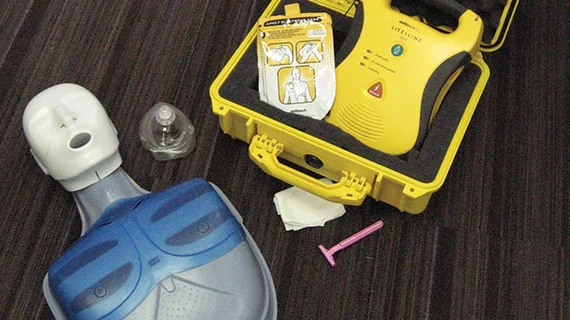
A new nationwide study from Japan highlighted the importance of timely ambulance arrival, showing that bystander defibrillation and cardiopulmonary resuscitation (CPR) for out-of-hospital cardiac arrest are essentially worthless if EMS response times are slower than 13 minutes and 11 minutes, respectively.

  • Read more about Bystander CPR, defibrillation only helpful for finite period

Pagination

    • First page « First
    • Previous page ‹ Previous
    • Page …2718
    • Page 2719
    • Page 2720
    • Page 2721
    • Current page 2722
    • Page 2723
    • Page 2724
    • Page 2725
    • Page 2726 …
    • Next page Next ›
    • Last page Last »
Subscribe
  • Home
  • News
  • Article Archive
  • Custom Content
  • Webinars
  • Press Releases
  • Content Studio
  • Advertising
  • Submit Press Release
  • Contact Us
  • Terms of Use
  • Privacy Policy
  • Cardiovascular Business
  • HealthExec
  • Radiology Business
 
© 2026 Innovate Healthcare | All Rights Reserved. | Terms of Use | Privacy Policy
 
Design by Adaptive Theme