Kerrin Lee-Gartner, who won a gold medal in alpine skiing at the 1992 Olympics and currently works as a sports analyst, has announced she is pledging her brain to the Canadian Concussion Centre (CCC) for concussion research.
Cerner owns 17.3 percent of the $29.7 billion global electronic health record (EHR) market, according to the annual Kalorama Information market share report, though No. 2 Epic leads the market for smaller hospitals and physician practices.
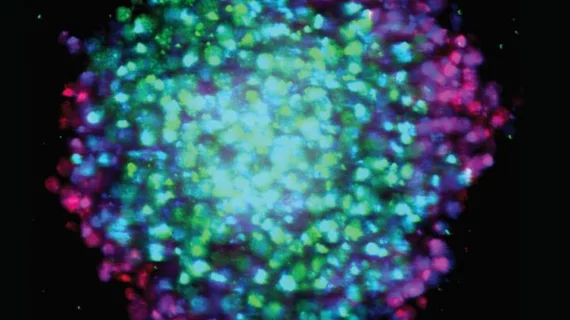
Researchers at the Scripps Research Institute, in a study published online May 10 in Octogene, developed spheroids that can be used for high throughput screening, which uses the structures to test for reactions to various drugs.
Nerves before an MRI are normal—up to 37 percent of patients report either moderate or high levels of anxiety leading up to an exam—and this apprehension can have physical consequences that render an entire scanning experience useless, first author J.R. Tugwell and colleagues wrote in Radiography this month.
Researchers have found that quantitative radiomics can better distinguish between benign lesions and luminal A breast cancers than using maximum linear size alone, according to a study published May 10 in Academic Radiology.
Extracting radiomic features from MR images can help radiologists distinguish between benign breast lesions and luminal A breast cancers, according to a new study published by Academic Radiology.
A sensing filter added to Boston Scientific’s Emblem subcutaneous implantable cardioverter defibrillators (S-ICDs) more than halved the number of inappropriate shocks given to patients over a one-year period, according to a real-world European study presented May 11 at the Heart Rhythm Society’s annual scientific sessions in Boston.
A team at the University of Alberta in Canada has devised a method utilizing a cyclotron particle accelerator to produce the radioactive tracer technetium-99m—the parent of Molybdenum-99. It may be able to produce enough radioactive isotope for the entire province, CBC.ca reports.
Iowa’s “supplemental payment plan” for nursing homes was rejected by CMS over concerns about having county hospitals assume the licenses of for-profit nursing homes.
The World Health Organization (WHO) is challenging all nations to rid their foods of artificial trans fats in the next five years, a move expected to curb the burden of cardiovascular disease worldwide. This task would likely require countries to use regulations or legislation to force food manufacturers to make the switch.