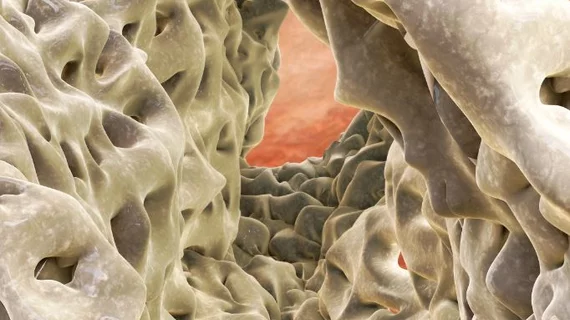
Combining a traditional approach to osteoporosis screening with quantitative CT starting at age 55 could reduce a woman’s lifetime risk of hip fracture while offering a cost-effective route for prevention, according to a virtual study published in Radiology this month.
Kaiser Health News reports on one facility—a 26-bed hospital in Surprise Valley, California—that is $4 million in debt—and in desperate need of outside help. The community may have found reason for hope, in the form of a 34-year-old former bodybuilder named Beau Gertz. He’s proposing a plan to use telemedicine to help boost revenue.
A compound found in green tea can break up the plaque that causes atherosclerosis, according to research published May 31 in the Journal of Biological Chemistry.
Radiology education has made substantial progress since its debut in the medical sphere, but students and faculty alike continue to suffer from communication barriers, high burnout risks and a lack of defined roles in the classroom, a group of administrators wrote in a compiled advice column for the Journal of the American College of Radiology.
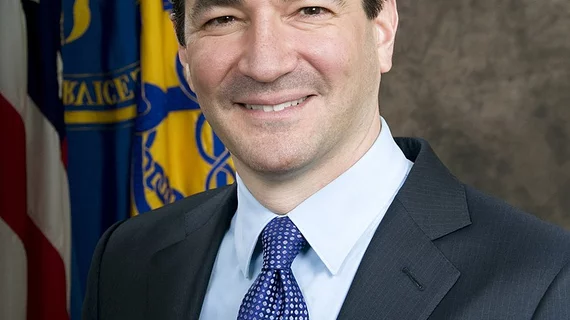
FDA Commissioner Scott Gottlieb, MD, delivered the opening remarks at the American Society of Clinical Oncology’s 2018 annual meeting at McCormick Place in Chicago, emphasizing his organization’s goal of reducing the time needed to connect cancer patients with treatment.
Virtual primary care visits for hypertension follow-ups are just as effective as in-person visits to maintain blood pressure control, according to a new study published on May 23 in the Journal of General Internal Medicine.
The Society for Imaging Informatics in Medicine’s 2018 annual meeting wrapped up with a keynote address from Curt Langlotz, MD, PhD, with Stanford University, on the rise of artificial intelligence (AI).
Research presented June 1 at the 2018 American Society of Clinical Oncology (ASCO) annual meeting in Chicago may help extend survival rates in patients with esophageal cancer by utilizing positron emission tomography (PET), according to a news release from the University of Colorado Cancer Center.
The electrical connection between the ventricular assist device (VAD)'s power source and its controller may be interrupted due to oxidation on the connecting surfaces, according to the agency’s recall notice.