Fast Healthcare Interoperability Resources (FHIR), the interoperability standard developed for the exchange of healthcare information, can dramatically improve patient care, according to a study published in the Journal of Digital Imaging.
In a California emergency room, a trauma patient in critical condition is wheeled in following a motorcycle accident. In Texas, a patient presenting with stroke-like symptoms is brought into the hospital by frantic family members.
The Kaiser Family Foundation released an issue brief June 22 that projected total Medicare spending to top $1 trillion by 2026, up from a total of $702 billion last year, according to Congressional Budget Office and CMS data.
Calico, a biotech firm backed by Google, announced a $1 billion extension to its partnership with AbbVie. Now with $2.5 billion in funding, the venture is aimed at finding cures for aging-related diseases, such as neurodegeneration and cancer.
Emphasize program integrity in audits of state claims for federal match funds and medical loss ratios (MLRs). CMS will audit some states based on clinical services spending and quality improvements.
To meet the latest guidelines on promptness from the American Heart Association (AHA) and American Stroke Association (ASA), providers must image suspected stroke patients within 20 minutes of their arrival. For a brain deprived of oxygen by a blood clot, every second counts.
Medical historians may one day look back on 2018 as the year having a stroke stopped bringing an inescapably bleak prognosis to victims who went a while before noticing the symptoms.
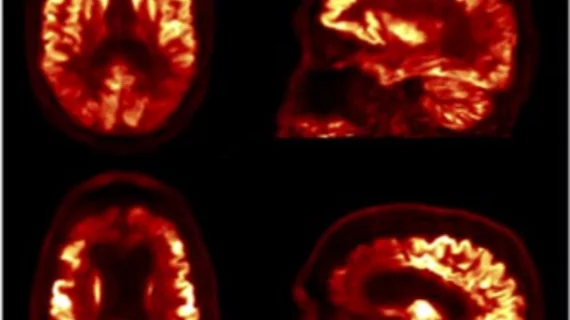
Researchers—led by Kevin Chen, PhD, a postdoctoral fellow at Harvard University's Microrobotics Lab—have found that spatiotemporally correlated data acquired using a single magnetic resonance (MR) sequence may be successfully used in a PET/MRI scanner for PET attenuation, motion and partial effects corrections.