The American Heart Association (AHA) and American Stroke Association this week pledged $6.5 million to a three-year initiative to improve Nebraska’s stroke response system, the Omaha World-Herald has reported.
Using patient-specific body weight-based protocols during whole-body fluorodeoxyglucose (18F-FDG) PET/CT can greatly reduce radiation dosage while maintaining image quality, according to authors of an Academic Radiology study.
Earlier this month, the FDA approved a contraception app for smartphones that claims to help users prevent pregnancy by monitoring body temperature and menstrual cycles. But critics are questioning the FDA’s move, pointing out that dozens of users got pregnant while using the app.
Out-of-pocket healthcare costs associated with breast cancer can already be enough to dramatically change a patient’s life. According to a new study published in Supportive Care in Cancer, those costs are even higher for survivors suffering from lymphedema.
Researchers at the University of Central Florida’s Center for Research in Computer Vision have created an artificial intelligence (AI) algorithm that can detect specks of lung cancer in CT scans with 95 percent accuracy.
New research published this month in Experimental Physiology suggests just 10 minutes of sitting or lying down could be enough to impair blood vessel function in the lower legs, but simple movements and foot exercises can work against that strain to restimulate blood flow and circumvent any deleterious effects.
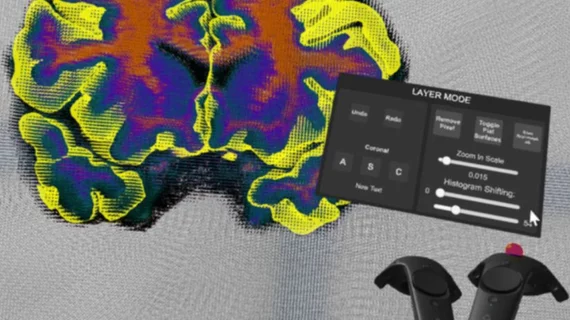
Courtesy of the University of Southern California.
Virtual Brain Segmenter (VBS), which automatically processes medical imaging data such as MRIs through segmentation, could increase the efficiency of brain scan analysis, according to a USC news release from Aug. 21.
Two studies published Aug. 21 in JAMA highlighted the link between heart and brain health. One found older individuals who met fewer metrics for ideal cardiovascular health had an increased risk of dementia, while the other showed that younger adults who didn’t achieve similar standards already had decreased cerebral blood flow and more white matter lesions.