FAI helps quantify vascular inflammation, predict future CVD events in cardiac imaging patients

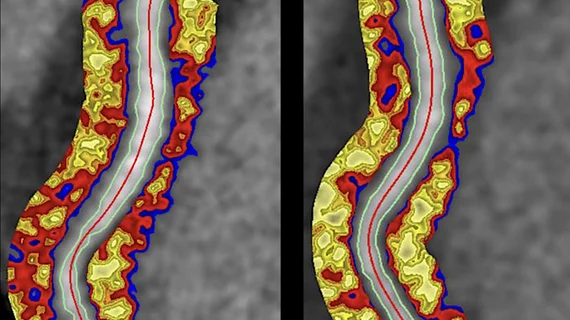
xPerivascular fat attenuation index CT scans from a drug study showing a reduction in coronary wall inflammation. This measure is being tested in trials to see if it can accurately predict which coronary artery lesions will progress to cause heart attacks. The method also can show a reduction in risk with therapy, as seen here.

Perivascular fat attenuation index CT scans from a drug study showing a reduction in coronary wall inflammation. This measure is being tested in trials to see if it can accurately predict which coronary artery lesions will progress to cause heart attacks. The method also can show a reduction in risk with therapy, as seen here. Before image on left, after treatment image on right.

The addition of perivascular fat attenuation to routine coronary computed tomography angiography (CTA) improves risk stratification in heart patients, according to research presented at the European Society of Cardiology (ESC)’s annual symposium in Munich, surpassing current prognostic models to re-classify and predict cardiac deaths with more accuracy.

ACR, SNMMI among groups that support CMS proposal to reduce E&M paperwork requirements

book_white_paper_stack_pile-59838.jpgd_.jpeg

The American Medical Association, American College of Radiology (ACR), Society of Nuclear Medicine and Molecular Imaging (SNMMI), Society of Interventional Radiology and dozens of other healthcare groups have signed a letter to CMS in support of the agency’s “Patients Over Paperwork” initiative and calling for a reduction in paperwork requirements for evaluation and management (E&M) services.