A group of radiologists at the Children’s Hospital of Philadelphia (CHOP) received a three-year, $300,000 grant from Bracco Diagnostics—a developer of diagnostic imaging solutions—to research and educate physicians on contrast ultrasound for use in pediatric patients.
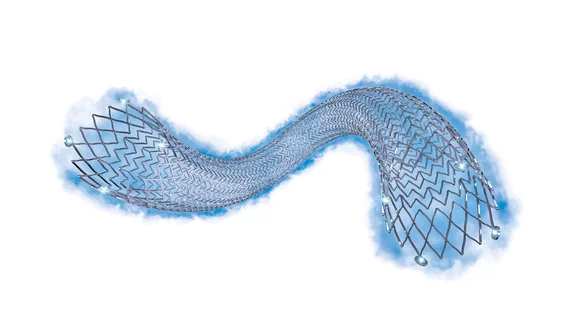
The Eluvia drug-eluting vascular stent system has been approved by the FDA, device maker Boston Scientific announced Sept. 24—just two days after results from the IMPERIAL trial were presented at the Transcatheter Cardiovascular Therapeutics 2018 meeting.
A novel, polymer-free amphilius-eluting stent known as the “Cre8” was proven noninferior to the latest-generation permanent polymer drug-eluting stent in the first large-scale trial of its kind, according to research presented at the Cardiovascular Research Foundation’s 30th annual TCT conference in San Diego.
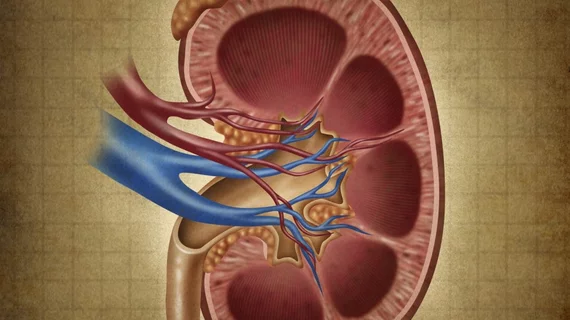
SAN DIEGO — An endovascular ultrasound-based renal denervation (RDN) approach led to greater reductions in blood pressure than radiofrequency ablation in patients with resistant hypertension, according to the first randomized trial to compare the techniques.
Researchers have developed a deep learning-based automatic detection algorithm (DLAD) that can detect malignant pulmonary nodules on chest x-rays better than physicians, sharing their findings in a new study published by Radiology.
Courtesy of the Radiological Society of North American (RSNA).
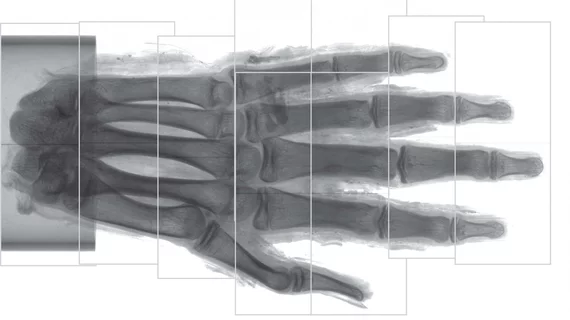
Swedish researchers have used a novel CT imaging technique to study the soft tissue of an ancient Egyptian mummy’s hand at microscopic levels, according to a Sept. 25 study published in Radiology.
At Australia’s Canberra Hospital, patients have been warned that previous scans are being ignored, trainee specialists are working unsupervised and scans are being sent to external, offsite locations because of radiology staff shortages.
Boston Medical Center, Brigham and Women’s Hospital and Massachusetts General Hospital have settled with HHS for compromising patient privacy by allowing crews to film an ABC television network documentary series without receiving authorization from patients.
Courtesy of the Radiological Society of North America (RSNA).
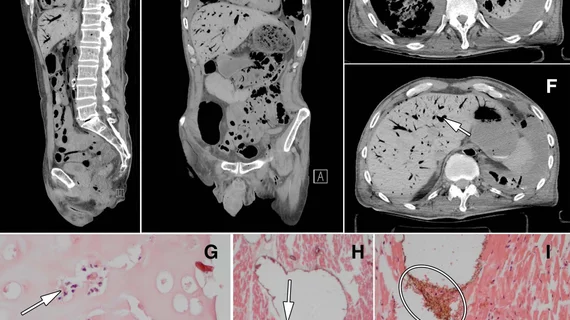
Minimally invasive autopsy using CT and MRI exams performed as well as conventional autopsy, though better determined unexpected causes of death and diagnostic information, according to a study published online Sept. 25 in Radiology.
Researchers at Worcester Polytechnic Institute (WPI) in Worcester, Massachusetts, recently secured $2.8 million in funding to develop a smartphone application that can detect symptoms of various medical conditions in soldiers.